How vintage furniture defines a contemporary home
A contemporary home can be beautiful and still feel curiously untouched. Clean lines, restrained palettes, and architectural silhouettes may establish the frame, but what gives a room its authority is often something less predictable: a chair with a past life, a table marked by use, a mirror whose gilded edge has softened with time. Vintage furniture brings what newness alone cannot always offer — tension, memory, and the quiet confidence of an object that has already endured.
The most compelling interiors today rarely belong to one period or aesthetic. They are edited rather than decorated, layered rather than matched. A modern room becomes more memorable when it allows another era to interrupt it with intention.
- 1. Why vintage belongs in the modern home
- 2. Start with one statement piece
- 3. Balance eras, don’t recreate them
- 4. Mix materials with intention
- 5. Layer texture, color, and light
- 6. The decorating mistakes to avoid
- 7. Where to source quality vintage furniture
- 8. The modern luxury of a collected interior
Why vintage belongs in the modern home
Vintage furniture has become one of the most refined ways to give depth to a contemporary interior. Against minimal architecture or polished finishes, an older piece introduces contrast, warmth, and a sense of lived-in intelligence. A mid-century armchair, a 1970s chrome floor lamp, or an antique wooden console can soften the precision of a modern room without disturbing its clarity.
This is not nostalgia for its own sake. The appeal lies in proportion, craftsmanship, and patina. Older furniture often carries details that are difficult to reproduce convincingly: hand-finished wood, aged brass, sculptural silhouettes, and upholstery that invites restoration rather than replacement. These elements bring permanence to a home shaped by the speed of trends.
A contemporary interior with vintage pieces also feels less anonymous. It suggests that the room has been collected over time, guided by instinct, memory, and a discerning eye.
Start with one statement piece
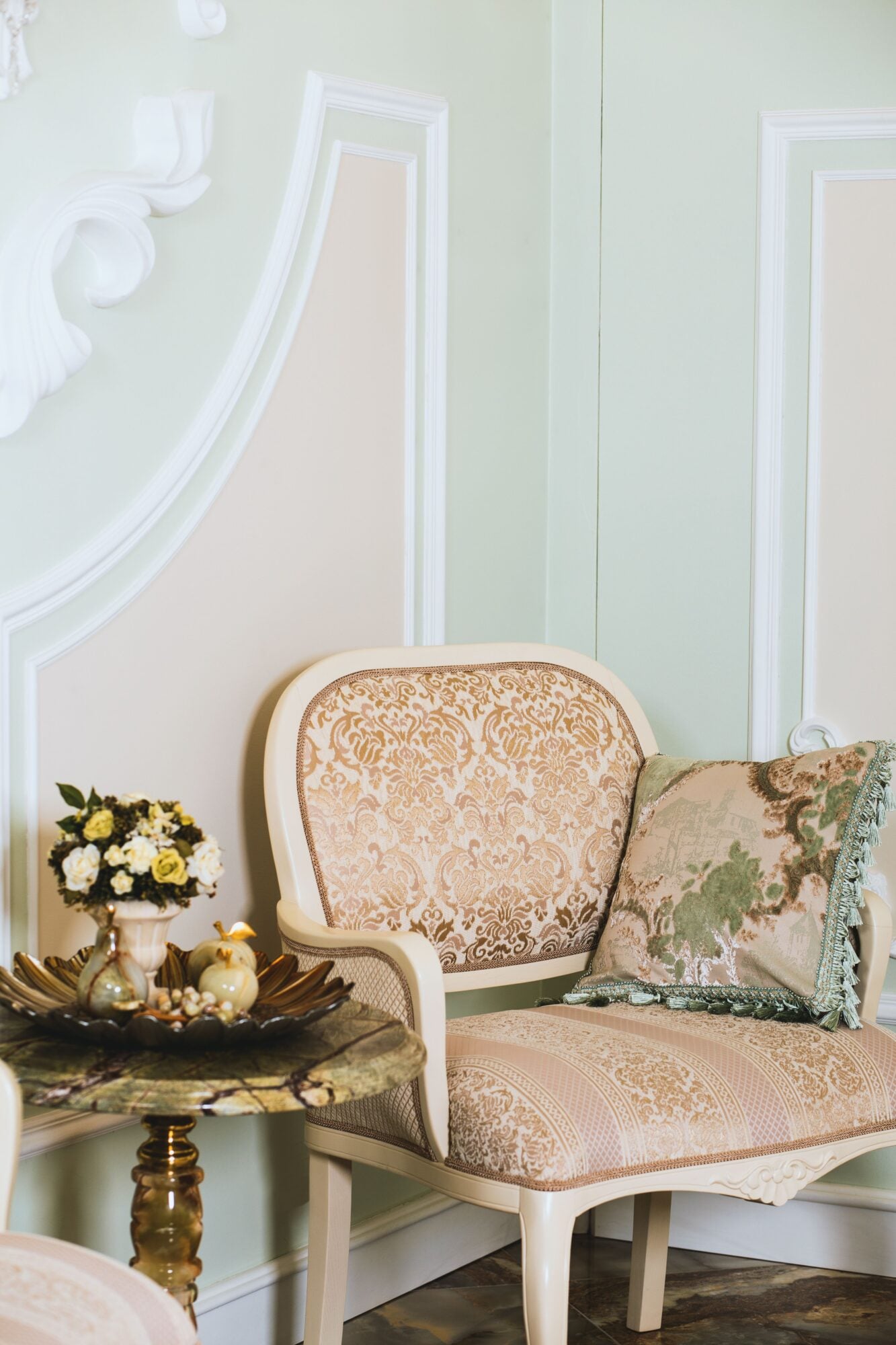
The most assured way to introduce vintage furniture into a modern home is through a single, decisive piece. One object can shift the entire atmosphere of a room without overwhelming it.
In a living room, that might be a low-slung Italian sofa, a travertine coffee table, or a pair of leather lounge chairs. In a dining space, a vintage wooden table can bring warmth to sculptural contemporary seating. In a bedroom, an antique headboard or lacquered dresser can add intimacy to an otherwise restrained setting.
The key is to give the piece room to breathe. A statement object should not have to compete with too many decorative references. Its presence is strongest when framed by quieter elements: a neutral rug, clean walls, considered lighting, and contemporary art.
Balance eras, don’t recreate them
The mistake is not mixing periods, but treating one era as a theme. A room filled entirely with mid-century furniture can quickly feel staged. An abundance of antiques may become heavy, even in a generous space. The aim is not to recreate the past, but to let it converse with the present.
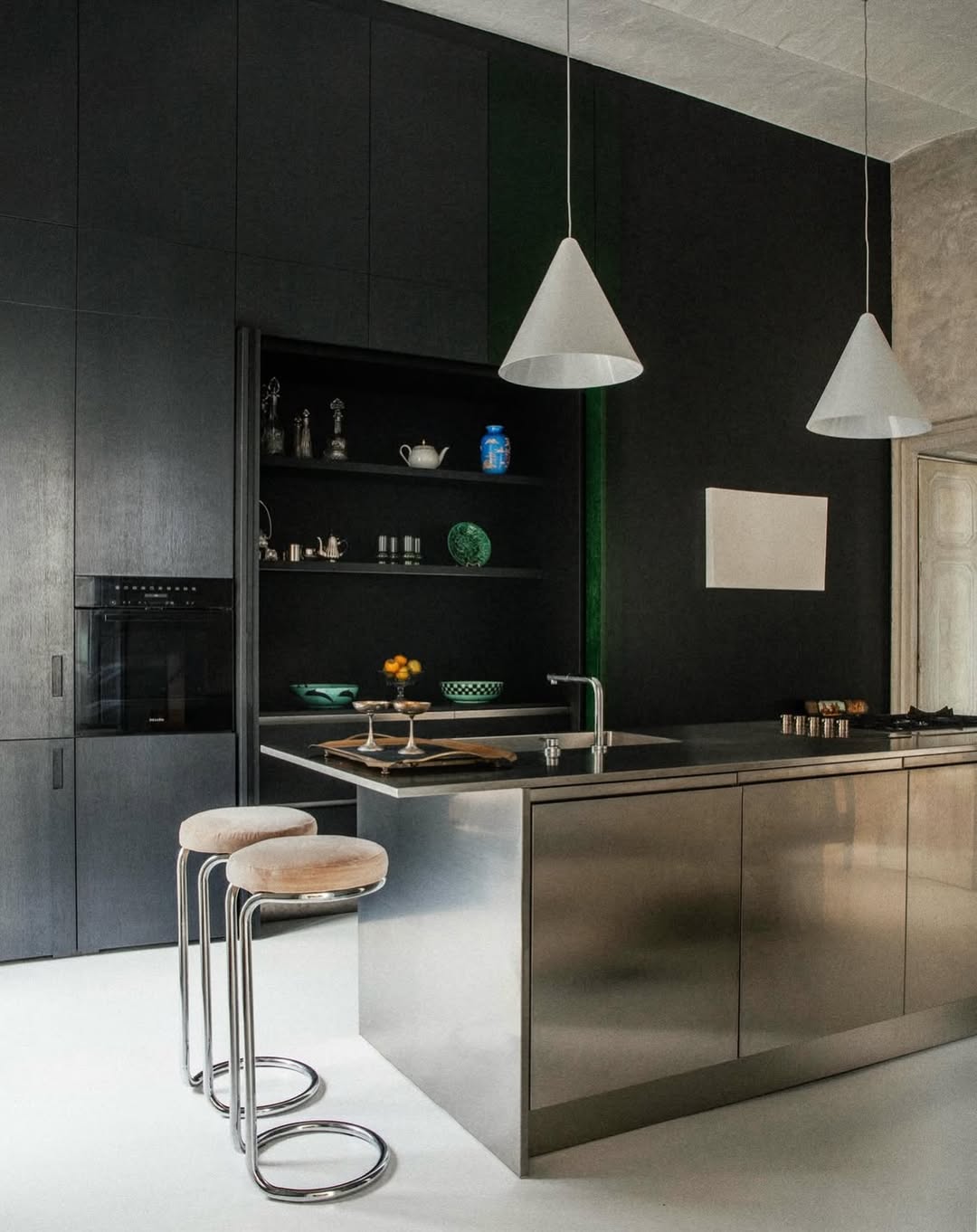
A contemporary sofa can look more refined beside an antique side table. A minimalist kitchen can gain warmth from vintage stools. A sleek marble bathroom might be softened by an old wooden seat or a 20th-century mirror. These contrasts are what make an interior feel alive.
Successful mixing depends on restraint. Pieces from different periods can coexist beautifully when connected through tone, proportion, or material. A 1940s chair, a modern linen sofa, and a 1970s glass table do not need to match; they need to share a certain visual rhythm.
Mix materials with intention
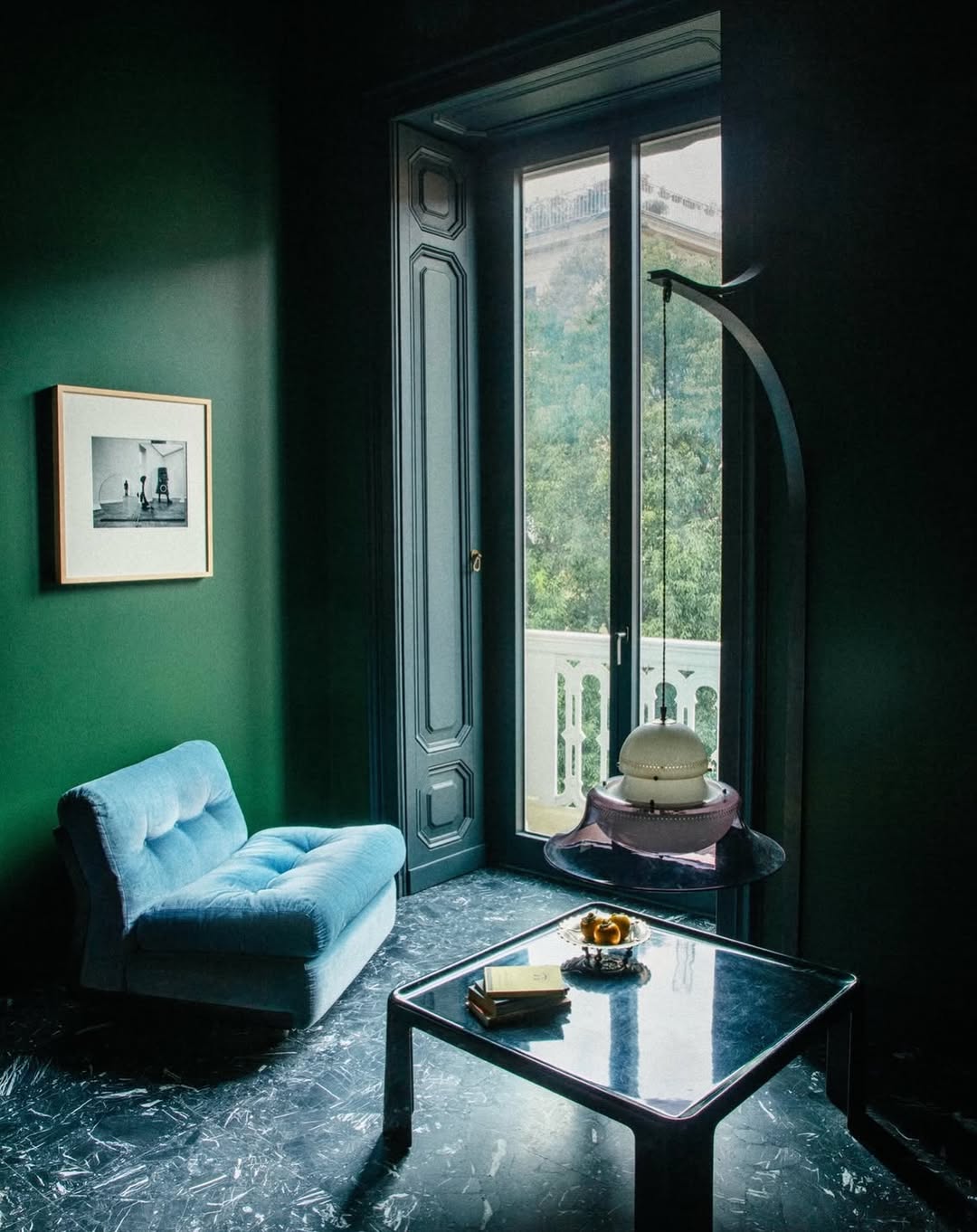
Materials often become the bridge between vintage and contemporary design. Wood, leather, marble, chrome, brass, glass, and stone each carry their own visual language. When combined with precision, they create a room that feels layered rather than mismatched.
A dark walnut cabinet can ground a bright white room. A brass lamp can warm the severity of a concrete floor. A smoked-glass table can make a vintage silhouette feel lighter, sharper, and more architectural. Natural textiles — linen curtains, wool rugs, bouclé upholstery — soften the transition between old and new.
The finish matters as much as the form. Too many glossy surfaces can make a room feel cold; too many distressed textures can make it feel rustic. A refined contemporary home usually benefits from contrast: polished against worn, soft against structured, matte against reflective.
Layer texture, color, and light
Vintage furniture becomes especially compelling when supported by texture and atmosphere. A room does not need to be filled with older pieces to feel collected. Sometimes, a vintage rug, a ceramic lamp, or a sculptural side chair is enough to bring depth.
Color can also make vintage furniture feel current. A traditional wooden piece looks sharper against chalky white walls or deep brown paint. A jewel-toned velvet chair becomes more contemporary when paired with abstract art and a pared-back floor lamp. Even ornate pieces can feel modern when placed in a clean architectural setting.
Lighting is essential. A vintage sideboard beneath a contemporary pendant light feels intentional, not inherited. A modern sofa beside an antique lamp gains atmosphere. Good lighting prevents older pieces from appearing dated by highlighting their shape, material, and craftsmanship.

The decorating mistakes to avoid
Decorating with vintage furniture requires editing. The first mistake is overcrowding the room. Vintage pieces often have strong silhouettes, and they need negative space around them. Too many competing objects can make even the most beautiful interior feel cluttered.
The second mistake is ignoring scale. An antique armoire may be exquisite, but it can dominate a small room. A delicate vintage chair may disappear beside oversized contemporary furniture. Before buying, consider height, width, and visual weight as carefully as style.
The third mistake is choosing pieces only because they are old. Age alone does not guarantee design value. Look for quality construction, elegant proportions, and materials that will continue to age well. A piece can show wear, but it should still feel structurally sound and visually purposeful.
Finally, avoid matching everything too carefully. A home becomes more interesting when it allows slight tension. The room should feel curated, not coordinated.
Where to source quality vintage furniture
Finding the right vintage piece is part of the pleasure. Flea markets, estate sales, auction houses, antique dealers, and specialist galleries all offer different kinds of discovery. For those who prefer a more curated approach, sourcing Vintage furniture online can be an elegant way to explore distinctive pieces with a clearer sense of provenance, condition, and style.
When sourcing, look beyond surface appeal. Ask about the period, designer, materials, and restoration history. Examine joints, upholstery, wood veneer, and metal finishes. A well-restored piece can be worth the investment, while poor restoration may compromise both its charm and value.
It is also wise to buy with a specific place in mind. Vintage furniture is often singular; the right piece can transform a room, but only if its proportions work within the space.
The modern luxury of a collected interior
The most desirable contemporary homes no longer feel newly assembled. They feel lived in, intelligent, and quietly individual. Vintage furniture answers that desire with objects that carry rarity, craftsmanship, and cultural memory.
To mix vintage with modern design is to reject uniformity. It is an act of taste, but also of patience. The room evolves through discovery rather than instant completion. And perhaps that is its greatest luxury: an interior shaped not by a catalog, but by instinct, history, and the beauty of things chosen well.