The best fabrics for custom sport coats, season by season
A well-chosen sport coat can transform even the simplest outfit. Whether worn over a crisp shirt or fine knitwear, its appeal lies in the balance between structure and ease. Yet beyond the cut, fabric determines how a jacket drapes, feels, and adapts to changing temperatures.
From lightweight Italian linen to traditional British tweed, each material brings its own character. Understanding their differences is essential to choosing a sport coat that feels appropriate throughout the year.
Spring and summer fabrics for custom sport coats
Warm-weather tailoring calls for breathable materials that maintain their shape without feeling restrictive. Fabric weight and construction are particularly important when temperatures rise.
For those investing in tailored clothing, finding the best bespoke sport coat begins with selecting a fabric suited to both the climate and personal style. Cloth weighing approximately 7 to 9 ounces per linear yard often works well in spring, while lighter options suit summer. Half-lined or unlined jackets can further improve airflow.
Lightweight wool and breathable weaves
Tropical wool is a versatile choice for warmer months. Its open weave encourages ventilation while preserving the clean drape of traditional tailoring. Naturally resilient, it also recovers well from creasing, making it ideal for travel.
Fresco, woven from high-twist wool yarns, offers a crisper texture and excellent airflow. Its structured appearance appeals to those who favor understated British tailoring.
Seersucker brings a distinctly American influence. Its puckered cotton surface helps keep the fabric away from the skin, making it comfortable in humid conditions. Paired with chinos and loafers, it captures the relaxed elegance of Ivy League summer dressing.
Linen and natural fiber blends
Linen remains a summer favorite for its breathability and relaxed texture. Its characteristic creases are part of its charm, particularly in softly constructed jackets inspired by Mediterranean tailoring.
For a more polished finish, linen-cotton blends offer a softer feel and somewhat better crease resistance. Linen-wool combinations balance airflow with improved shape retention, while silk blends introduce a subtle sheen.
A sand-colored linen jacket worn with cream trousers creates an effortless summer look without sacrificing sophistication.
Fall and winter fabrics for custom sport coats
Cooler weather invites richer textures, deeper colors, and more substantial fabrics. Wool flannel and tweed offer warmth while introducing visual depth to seasonal wardrobes.
Fabrics weighing approximately 10 to 14 ounces per linear yard are often suitable for fall and winter. Fully lined construction can also make layering over knitwear more comfortable.
Flannel and cashmere blends
Wool flannel is a classic cold-weather choice. Its brushed surface creates a soft, understated finish, particularly attractive in charcoal, navy, and tobacco brown.
A flannel sport coat paired with a fine merino sweater and tailored trousers offers a contemporary approach to smart-casual dressing.
Cashmere adds softness and warmth, although pure cashmere can be more delicate. Wool-cashmere blends provide a practical balance between comfort, texture, and durability.
Tweed and textured wool
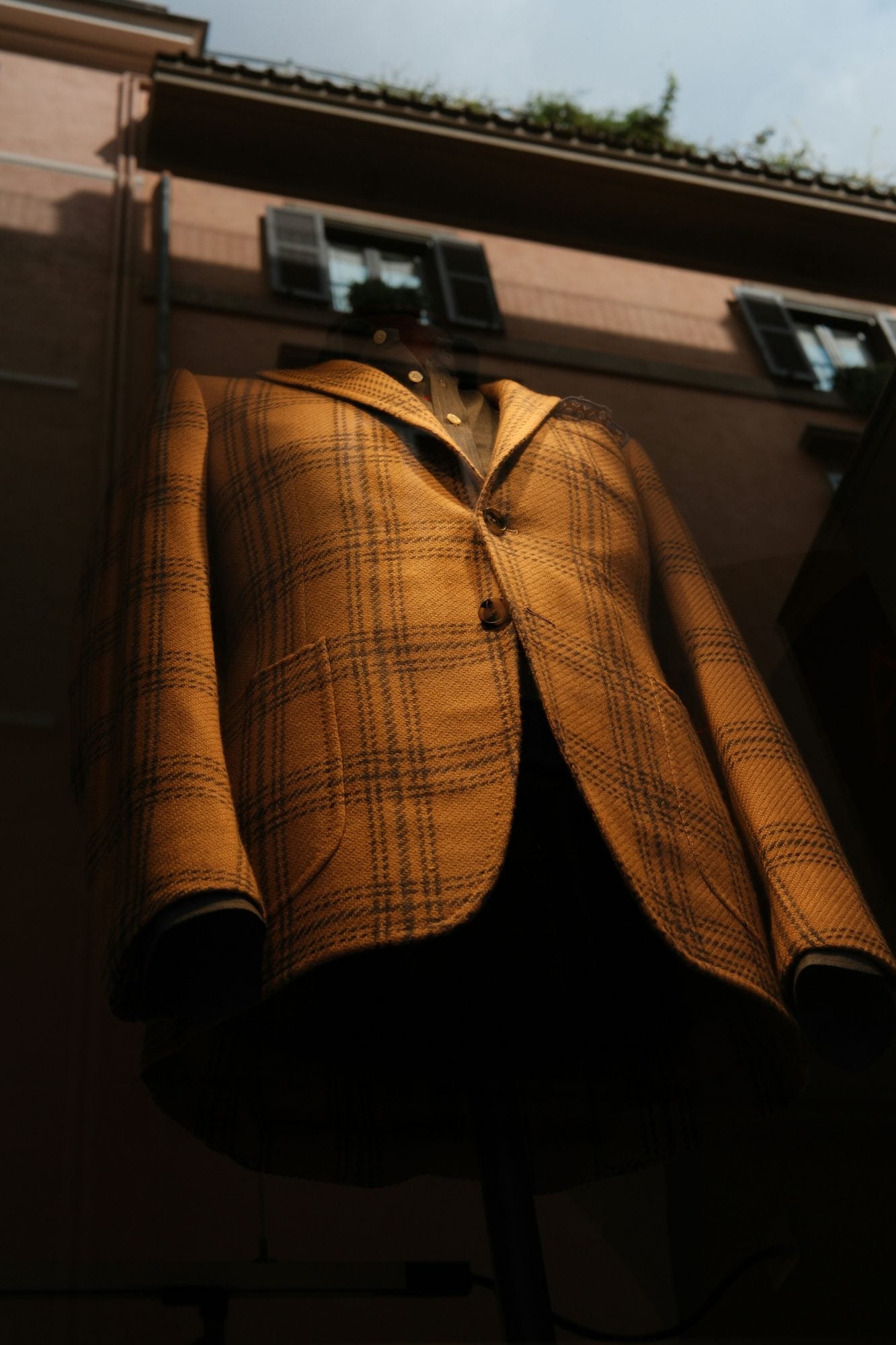
Tweed remains synonymous with British sartorial heritage. Harris Tweed, handwoven in Scotland’s Outer Hebrides, is prized for its durability and earthy tones. Donegal tweed introduces colorful flecks that give the fabric a more distinctive character.
Both work beautifully with dark denim, wool trousers, and suede footwear.
Herringbone offers a subtler alternative, with its distinctive V-shaped pattern adding depth without overwhelming the silhouette. These heritage fabrics reflect the appeal of craftsmanship and understated luxury.
Choosing the right fabric weight and blend
The ideal fabric depends on more than the season. Climate, lifestyle, and frequency of wear all influence how a sport coat performs.
Wool remains particularly versatile thanks to its natural elasticity, moisture management, and wrinkle recovery. Merino wool offers a softer finish, while wool-silk blends provide subtle luster and wool-linen combinations balance structure with breathability.
Synthetic blends can offer advantages such as stretch and easier maintenance, depending on their composition.
For year-round versatility, a medium-weight wool sport coat in navy, gray, or brown is an excellent foundation. It transitions easily between tailored trousers, chinos, and dark denim.

The enduring appeal of seasonal tailoring
The finest sport coats combine comfort, craftsmanship, and thoughtful fabric selection. Linen and tropical wool bring lightness to warmer months, while flannel and tweed offer texture and warmth when temperatures fall.
Choosing a fabric that suits both the climate and the wardrobe ensures a jacket remains relevant beyond a single season.