Art Therapy: What if Well-Being Comes Through Art?
This publication is also available in:  Français
  English (UK)
  Deutsch
  Italiano
  Español
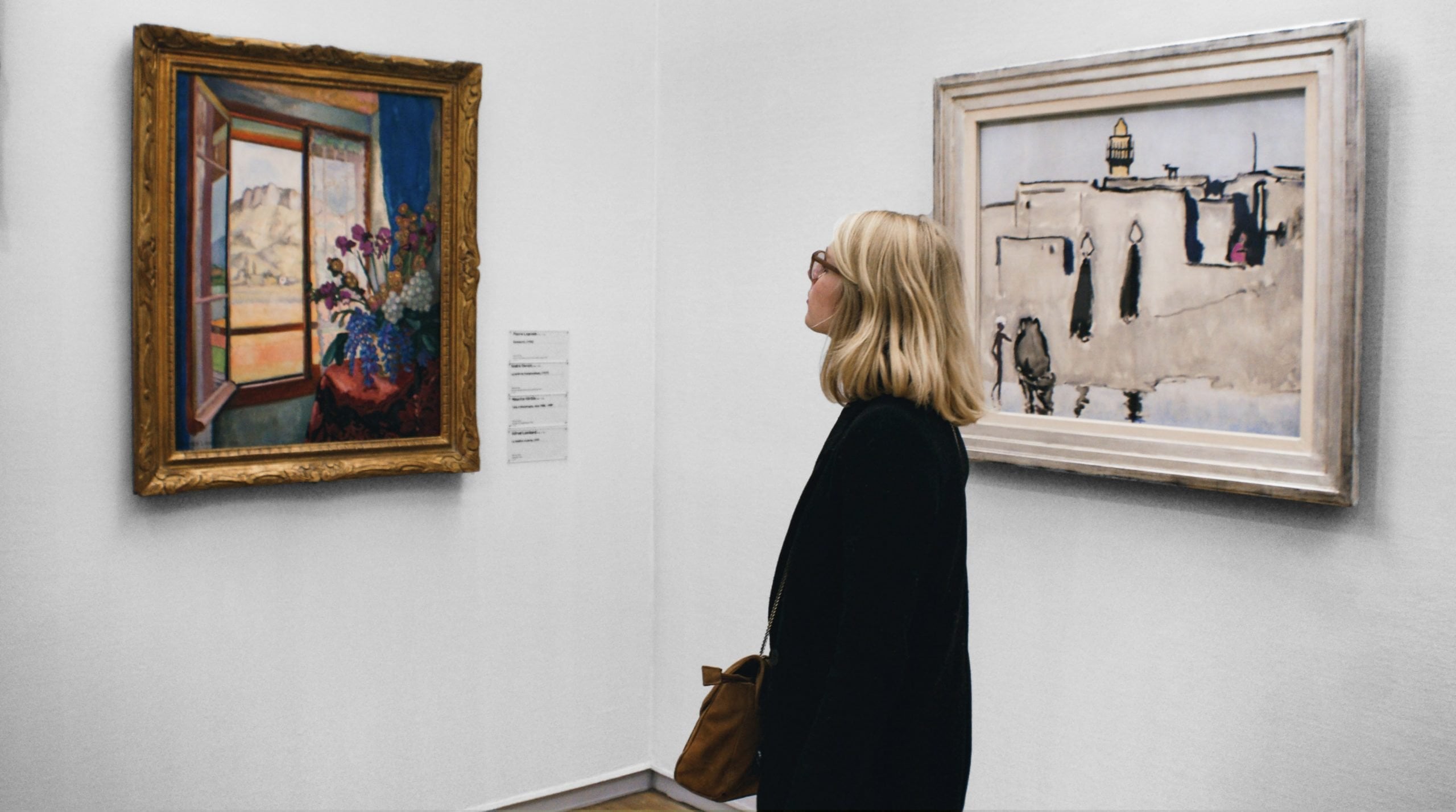
Feeling a little down? What if you swapped your shopping trips for a museum visit? It’s more eco-friendly, more intellectually stimulating, and above all, it has real benefits for mental health. Museum therapy is not exactly a science, but rather a trend in wellness and disconnection that soothes and brings serenity in a world that moves too fast.
What if wandering through a museum, amidst masterpieces by great painters, was one of the solutions to allow yourself a break during the week and create a little bubble of calm in the midst of the chaos of our lives?
Let’s focus on this practice that wishes you well.
Museum Therapy: Art Therapy for All
The concept of museum therapy first emerged after World War II, gaining prominence in the 1980s and 1990s. It developed alongside art therapy for patients with mental disorders before expanding to lighter pathologies such as ADHD and anxiety.
Unlike art therapy, museum therapy does not invite the public to engage in artistic practice, but rather utilizes the soothing characteristics of the space, the environments, and the ambiance to enhance the experience of the audience.
Since 2010, therapeutic initiatives have multiplied. Initially for those who are seriously ill, with a therapist present to guide patients through a journey inside the museum.
Then for the general public, envisioning the museum as a place for pause and disconnection, where the aim is not necessarily to learn dates or recognize aesthetic movements, but to be carried away by the aesthetics of the space, the benefits of colors, or the silence and calm that generally reign in museums.
The goal is not for the museum to become a place of healing, but for it to play a therapeutic role in its mission to bring the public closer to art.
The Benefits of Museums on Mental Health
Stepping away from screens, finding a moment for oneself surrounded by beautiful artworks, treating oneself to a moment of calm… This is what visitors often express about their museum experience, not just for learning but also to find an oasis of serenity, all of course in a beautiful space where it’s easy to navigate among works of art.
Without suffering from mental disorders, studies have shown that visits to museums have a positive effect on mental health. They notably reduce stress levels and improve concentration. Even a short visit provides a sense of calm comparable to that of a walk in nature.
For those with more specific needs who suffer from anxiety or post-traumatic stress, for instance, some museums, like the one in Lille, offer a museum prescription. The aim? To allow a patient to benefit from a session accompanied by art therapy within the museum, which combines artistic practice with care.
Museums: True Agents of Evolution
We tend to view museums through the works displayed within them: immutable, untouchable, and frozen in their time. However, this is far from the truth. In fact, museums evolve with mentalities, and today, most of them focus on creating initiatory and playful pathways so that visitors not only enjoy looking at the works but also experience a truly positive engagement. This desire for openness is gradually transforming museums into places of life, sharing, and inclusion, far beyond their primary mission of conservation.
The Lille museum, in collaboration with the university hospital, is thus offering a women’s workshop in October for breast cancer prevention. This unique initiative demonstrates how museums have a vested interest in adapting to societal evolution and how they can become true social agents for a public in search of knowledge… and self-knowledge.
In the same spirit, the Carnavalet museum in Paris offers a queer tour created by an LGBTQIA+ guide to provide a safe and secure space for those who wish to feel fully at home in public spaces. These new approaches prove that museums are striving to reach diverse communities and expand their cultural role into a social one.
The same goes for children: more and more institutions are integrating their youngest visitors by allowing them the freedom to express themselves without stifling them or disturbing other spectators. They are thus supported in their discovery of art with tailored devices that transform the visit into a moment that is both educational and enjoyable.