Azzedine Alaïa and Arthur Elgort Exhibition: Fashion Unleashed
This publication is also available in:  Français
  English (UK)
  Deutsch
  Italiano
  Español
While one dreamed of being a sculptor and the other a designer, the exhibition Azzedine Alaïa, Arthur Elgort. In Freedom. allows us to rediscover the work of the couturier through the lens of the New York photographer. A look back at a shared vision of a liberated fashion championed by an independent woman.
Who is Azzedine Alaïa?
Born into a farming family in Tunis in 1935, Azzedine Alaïa was always inspired by art, fashion, cinema, and all the people who crossed his path. These creative worlds and encounters shaped both the man and the artist he would become.
Initially destined for sculpture at the fine arts school in Tunis, he diverted his path towards fashion when he realized he could only be a second-rate sculptor. Azzedine Alaïa, who learned to sew alongside his sister to finance his studies, gradually attracted attention, leading to requests for custom-made pieces for private clients.


The late 1950s marked his arrival in Paris and the beginning of numerous encounters that allowed him to refine his technique, style, and especially his clientele. Joining the house of Guy Laroche, he also became a couturier to high-ranking women, including the Rothschild family, while simultaneously receiving orders for houses and stylists like Christiane Bailly.
A Life of Encounters
Over the years, the couturier built a network connecting him to the world of art and fashion, a major source of his inspiration. Orson Welles, Jean Cocteau, Miro, Bernard Zehrfuss, Louise de Vilmorin, Lison Bonfils… Among filmmakers, painters, architects, writers, models, and editors of major magazines, the Azzedine Alaïa exhibition highlights the importance of this circle of close friends for the couturier, both professionally and personally.
The Creation of the Alaïa House
Some of these encounters were pivotal in writing his career, particularly the opening of his own house, primarily supported by Thierry Mugler and Melka Treanton. Thus, in the mid-1960s, he established it at 60 rue de Bellechasse, before showcasing his work in New York in the 1980s and officially naming his house “Alaïa” with a first Spring-Summer collection presented in Paris in 1983. Fame followed, and his address moved to a private hotel before settling permanently at the current foundation location, where the Azzedine Alaïa exhibition is held.

After a few years of creative blur following the loss of his sister, Azzedine Alaïa relaunched the house at the end of the 1990s, subsequently presenting his first haute couture show, nodding to his previous iconic pieces. An event renewed in 2011. Like other designers, the couturier decided to create his own collection calendar to create at his own pace, up until his passing in 2018.
Azzedine Alaïa and Art
Over the years, the couturier’s work, part of which is visible in the Azzedine Alaïa exhibition, has been showcased through various presentations around the world. Exhibited alongside other artists, these scenographies emphasize the creator’s attachment to art, which he himself collects. Over the years, Azzedine Alaïa acquired pieces of art and designer dresses, and furthermore, integrated an exhibition space into his address to present the work of other artists.
With a love for cinema, nurtured by the films he watched in his youth, particularly with Rita Hayworth, Azzedine Alaïa approached the industry by receiving commissions from great names like Arletty and Greta Garbo. The world of entertainment also came to him, with the creation of costumes for the dancers of the Crazy Horse, as well as for “The Marriage of Figaro” directed by Christopher Alden.
Who is Arthur Elgort?
Born in New York, the photographer was also destined for a different career: that of becoming a painter.
However, not developing in practice, a visit to a camera shop in the 1960s launched him into a new passion, photography. Starting with a Polaroid, he then progressed to a Nikon model, developing an interest in various camera bodies and thus confirming his desire to be part of this field.
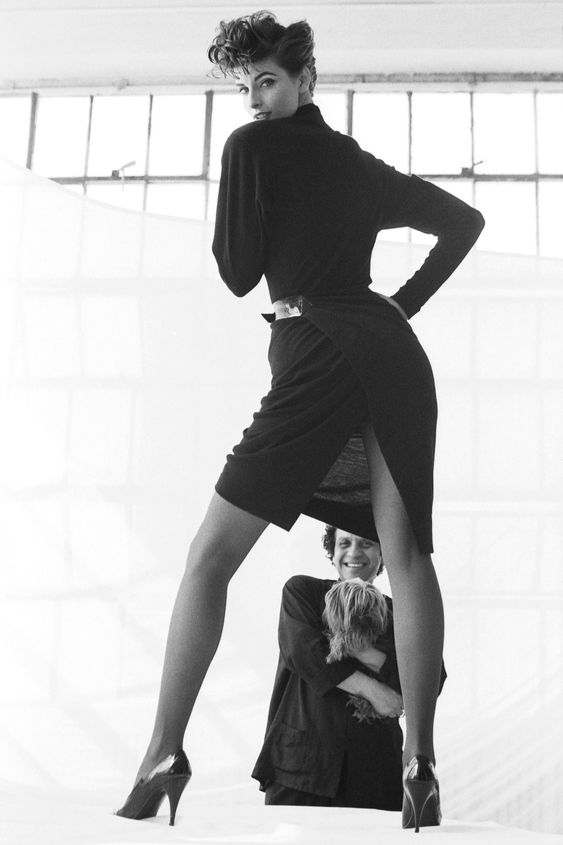
Refining his technique through practice, his shots were noticed, particularly by Alexander Liberman, then the great director of publications at Vogue. Within a year, the photographer saw his work highlighted and found himself working alongside great names, such as Polly Allen Mellen.
He partly owes his success to his approach to photography that captures the natural, freeing itself from all studio decor. An eye that captures the present moment with subtlety, bringing a new breath to fashion photography.
The Azzedine Alaïa, Arthur Elgort Exhibition: Between Issues of Place and Movement
Although the two artists come from different backgrounds and countries, their vision of art, fashion, and time brought them together. Together, their shared vision and the marriage of one’s ready-to-wear creations and the other’s captured moments have reshaped the codes and brought a new definition of freedom in the 1980s.
The Azzedine Alaïa exhibition highlights this artistic meeting, which aligns with an evolution of their respective practices. On one side, the era is marked by the couturier’s work spreading through the streets, worn by independent and assertive women. On the other side, the photographer immerses himself in the approach of outdoor photography.

The cities have become the new backdrop for shoots, replacing white walls with everyday actions that allow the garment to express itself on women’s bodies.
Together, they captured the movements of fabrics and the curves of models, all with spontaneity, authenticity, grace, and character. A marriage of two universes that become a unity, where neither overshadows the other. A space of freedom that allowed both artists to meet and create beautiful works.
Between black and white and light games, the elements are designed to contrast the cuts of the fabrics and the stolen postures of the moment, establishing a new approach to fashion photography.
Discovering the Azzedine Alaïa Exhibition at the Parisian Foundation
Located at the end of a small cobblestone courtyard in the heart of the Marais, the exhibition Azzedine Alaïa, Arthur Elgort. In Freedom, immerses us in a place rich in history and elegant architecture. Under its glass roof, presenting itself as a well of light, the scenography introduces us first to the artists through a historical timeline and films filled with nostalgic testimonies.
Next comes a clean and well-thought-out space, highlighting the marriage of the two arts. Adorning the walls of this room, we observe the photographs of Arthur Elgort in a black and white that is both striking and soothing. On their back, the pieces shown in the photos echo in their cocoon, like a second reading of the captured moment.

A just way to present the two arts in their unity as well as in their association. We move from outfit to outfit, photo to photo, moment to moment. Before our eyes appear Linda Spierings, Jeny Howorth, Janice Dickinson, Bonnie Berman, Frederique Van der Wal, Naomi Campbell, Christy Turlington, Cindy Crawford, Linda Evangelista, and Stephanie Seymour. All wrapped in Azzedine Alaïa’s cuts, captured in moments where the pose is reinvented. The couturier even features in some shots, sharing moments of conviviality and complicity that are part of the framing.
A sober and poetic way to rediscover this artistic collaboration that influenced many aspects of fashion in the years that followed.
Craftsmanship at the Heart of the Azzedine Alaïa Exhibition
On the upper floor, a small preserved gem is revealed to us for the first time. That of the workshops. Long kept secret, they now unveil behind a bubble-shaped glass, a space filled with history and creativity, where time seems to have stopped, among rolls of fabrics, scissors and needles, patterns and hangers, boxes of buttons and other ornaments.
A place that has been the stage for long nights of creation, moments of exchange, and the birth of iconic pieces.
Additionally, the adjoining space highlights the photographs of artist Thomas Demand. Patterns and other cutouts are revealed before us, on prints of striking clarity, colorimetry, and framing. A dive into the couturier’s universe from another angle, which punctuates and contrasts with the Azzedine Alaïa, Arthur Elgort exhibition.
A visit that concludes with a stop by the bookstore dedicated to art, as well as a small café sheltered from the hustle and bustle of the capital.
Our Selection of Pieces Echoing the Azzedine Alaïa Exhibition
If the pieces spark your curiosity, find numerous items from the Alaïa house on Modalova, to also feel this wind of freedom.
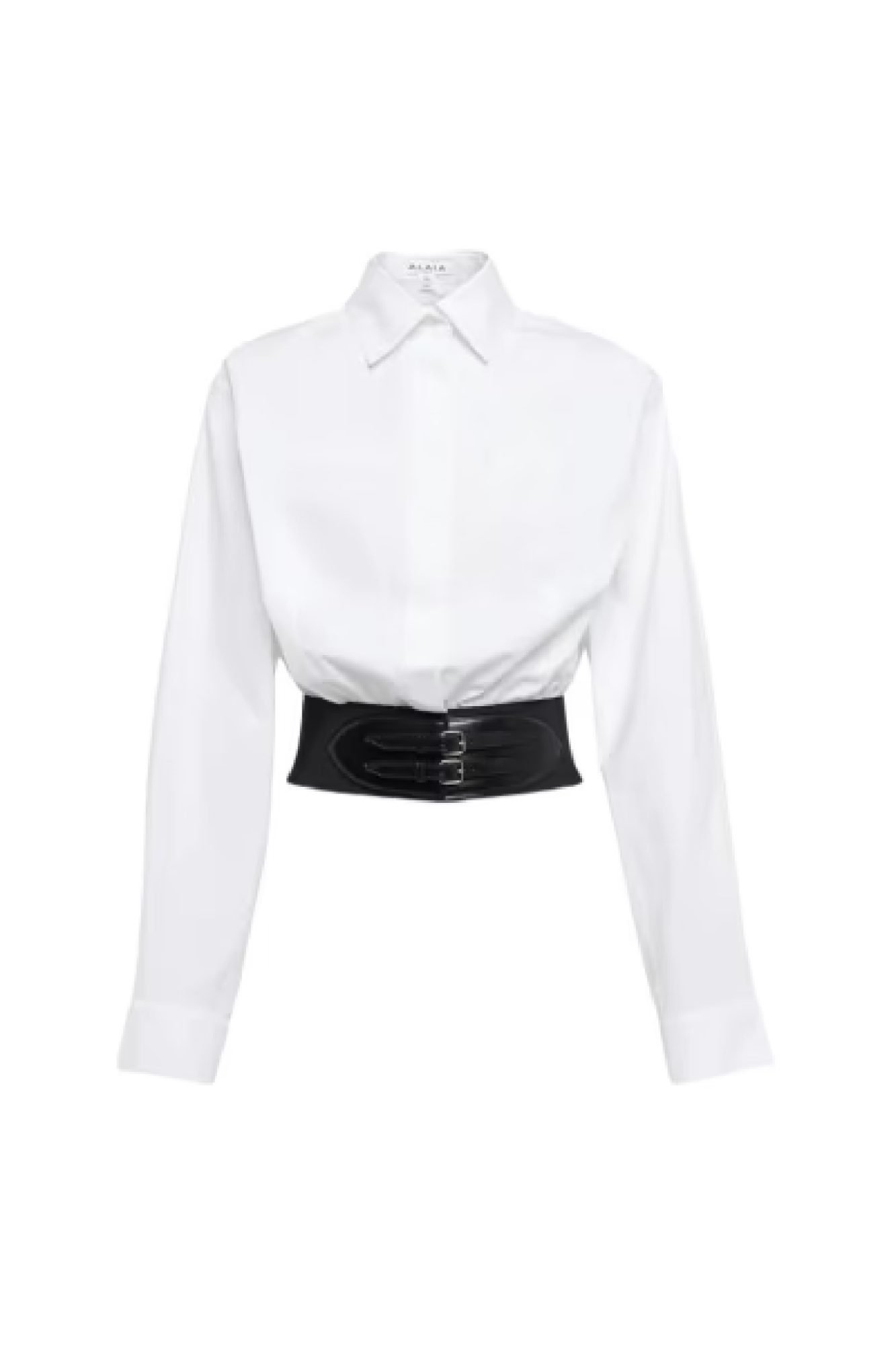
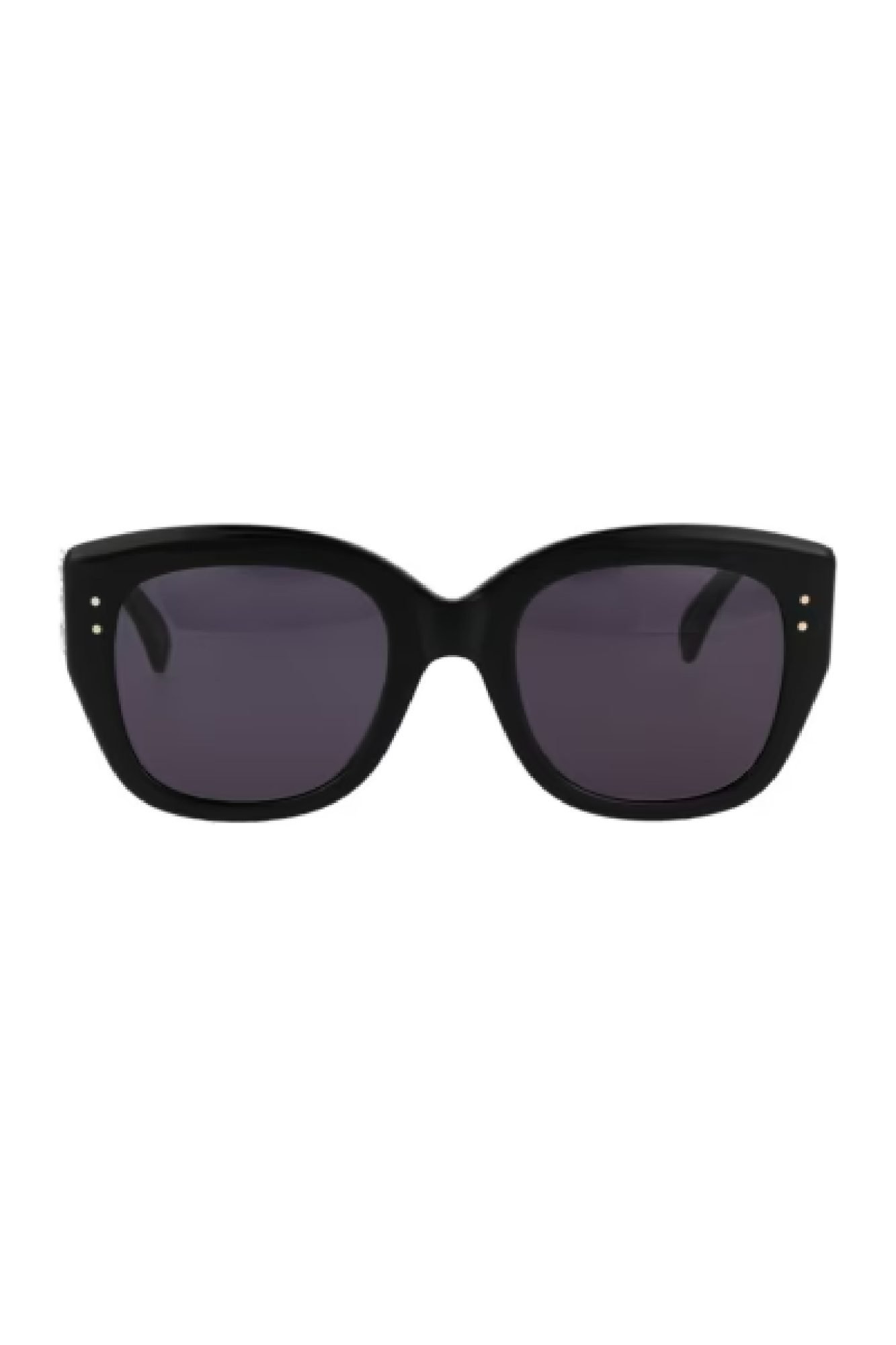

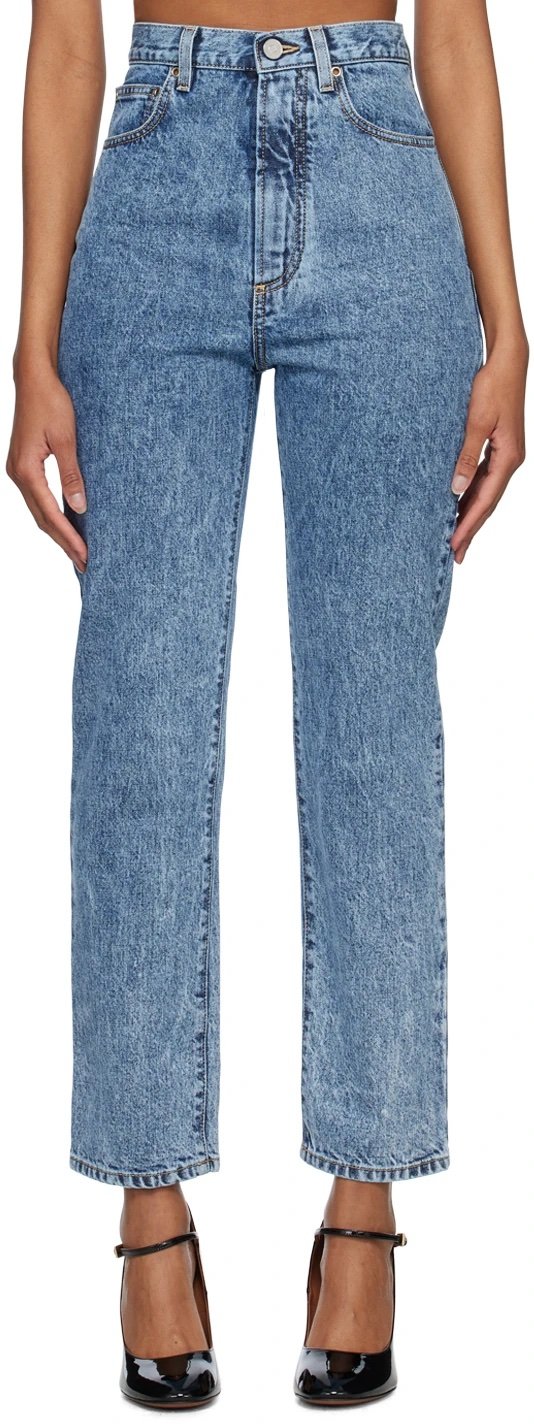

Photos: Pinterest