How to dress a child without multiplying outfits? The simple and elegant method
This publication is also available in:  Français
  English (UK)
  Deutsch
  Italiano
  Español
Too many clothes, yet always the feeling of having nothing to wear? Good news: an effective children’s wardrobe doesn’t need to be filled to function.
The observation is almost universal. Closets are overflowing, piles are accumulating, and yet every morning feels like a small logistical challenge. Matching, searching, replacing, starting over. Multiplying outfits seemed to be the solution; it has often become the problem. By buying complete sets designed to be worn together, the wardrobe becomes fragmented. The pieces do not communicate well with each other, some are rarely worn, and others wear out too quickly.
Dressing a child without multiplying outfits requires a shift in perspective. It’s no longer about thinking in “looks,” but in wardrobe. A wardrobe designed as a coherent whole, capable of adapting to real days: school, home, outings, cold, movement. A simpler, more fluid approach that lightens daily life without sacrificing style.
Why multiplying outfits complicates daily life
Accumulating outfits gives the impression of choice. In reality, it often creates the opposite effect. Clothes bought as sets rarely work well separately. A top that’s too distinctive, a bottom that’s hard to match, an isolated color: these are pieces that require a specific context to be worn.
As a result, some outfits are worn once or twice and then set aside. Others become default solutions. The wardrobe loses clarity. In the morning, the eye tires from scanning too many incompatible options. Decision-making takes time, generates frustration, and ultimately weighs down an already dense routine.
Additionally, there’s a well-known side effect: more clothes also means more laundry, more storage, and more rotation to manage. Multiplying outfits often multiplies constraints.
Think in terms of wardrobe, not outfits
The key lies in a change of logic. A wardrobe is not a succession of looks, but a foundation of pieces that work together. Each garment is chosen for its ability to easily pair with others, to layer, to evolve throughout the day.
This approach, well known in adult wardrobes, adapts perfectly to childhood. It allows for a reduction in the number of pieces while increasing possibilities. A pair of trousers that goes with all tops. A knit that layers over multiple layers. A coat that gets through winter without imposing a unique style.
Thought of this way, the wardrobe becomes a fluid system. It follows the child’s rhythm rather than constraining it.
The 5 essential types of clothing to limit outfits
To avoid accumulation, it is useful to think in broad categories rather than precise quantities. The idea is not to count but to balance.
A versatile coat. A central piece suitable for most winter situations, capable of working as well with a simple outfit as with a more dressed-up ensemble.
Two to three easy-to-layer tops. Pieces that can be worn alone or under a knit without constraints of style or color.
Two compatible bottoms. Comfortable cuts designed for school as well as outings, and above all, easy to pair with all tops.
A central warm knit. Sweater or cardigan: the piece that structures the silhouette and allows adjusting the outfit to the temperature.
A “buffer” piece. Vest, overshirt, or thick sweatshirt, capable of being interposed between several layers as needed.
With these five pillars, combinations multiply naturally without increasing the number of clothes.
Focusing on colors that go with everything
Color plays a decisive role in the coherence of the wardrobe. Some shades facilitate combinations, while others complicate them. For winter, muted and natural palettes offer an obvious advantage: they combine effortlessly.
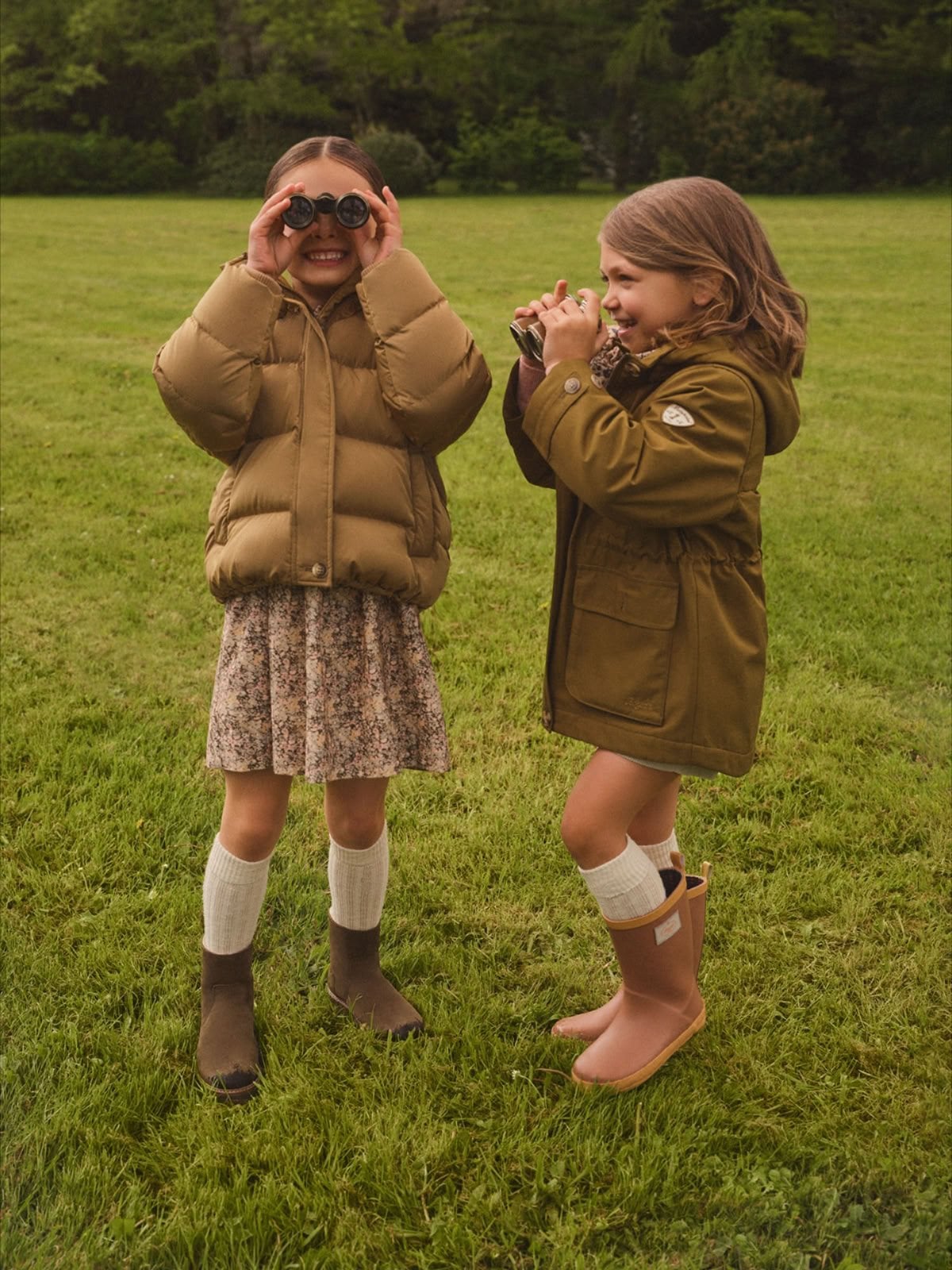
Stone grays provide a stable base, neither too cold nor too pronounced. Ecrus soften the whole and capture winter light. Muted greens — sage, gray olive — introduce a subtle hue without breaking harmony. Paired with some warm browns, these colors create a readable, calm, and durable ensemble.
By limiting the palette, we also limit the need to multiply pieces. Each garment finds its place more easily in the whole.
Adapting the wardrobe to the child’s real rhythm
An effective wardrobe is not only aesthetic. It is designed for real use. Clothes must accompany the child throughout the day: running, sitting, going out, coming home, warming up, uncovering.
Pieces that are too specific — too fragile, too dressy, too constraining — rarely find their place in this daily life. In contrast, versatile garments capable of transitioning from one context to another reduce the need to change outfits.
Dressing a child without multiplying outfits means accepting this reality: comfort, freedom of movement, and simplicity are allies of style, not enemies.
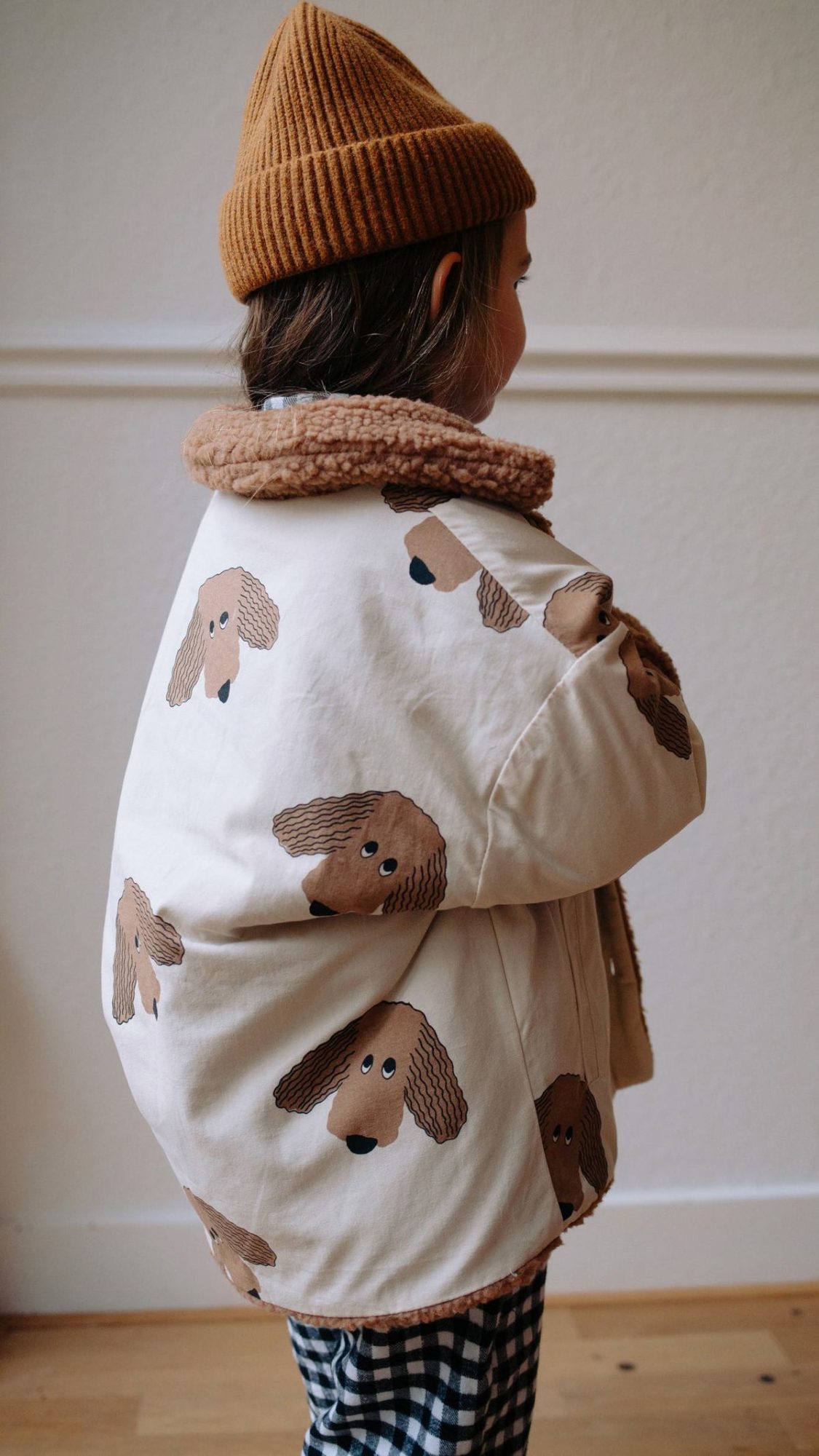

Fewer clothes, more fluidity
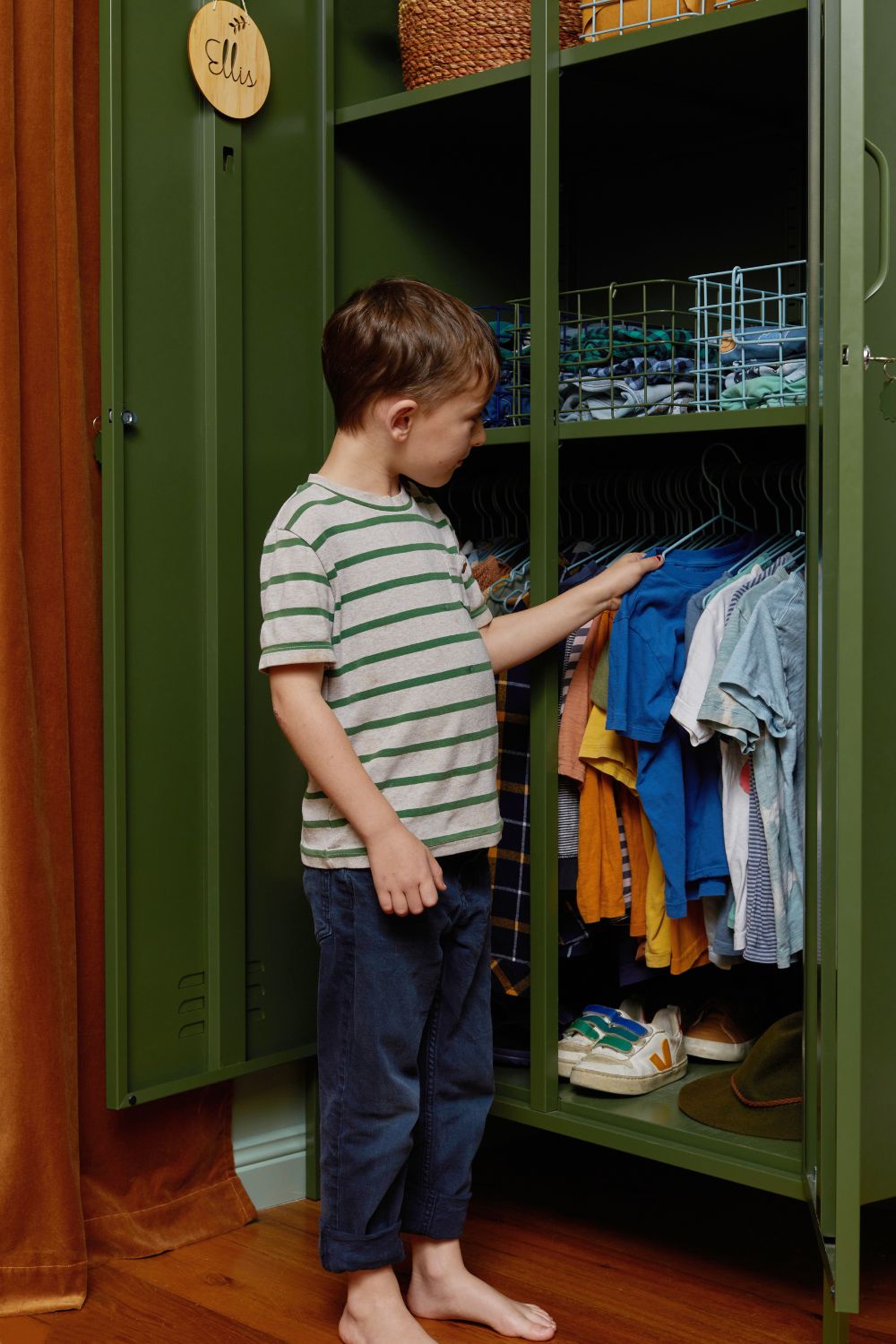
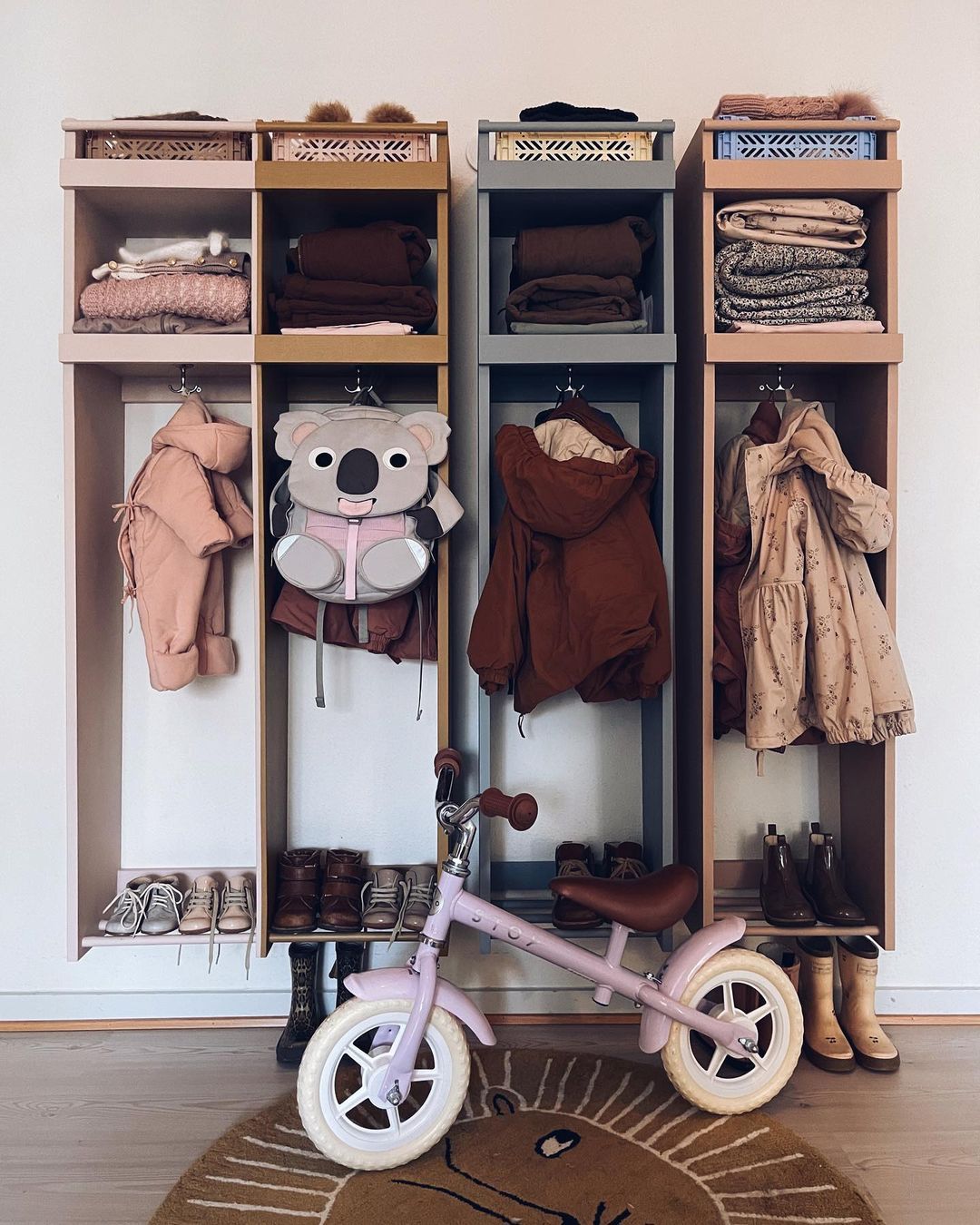
A streamlined wardrobe offers immediate clarity. Choices are made quicker, associations become instinctive, and organization simplifies. The child gains autonomy, mornings become smoother, and the relationship with clothing calms.
This simplicity is not a constraint, but a form of freedom. It allows for better visibility of what one owns, better usage, and often a greater appreciation.
Dressing a child without multiplying outfits does not mean giving up style. It’s about creating a coherent framework, designed to last, in which each piece has a reason to exist. A wardrobe that works, simply.