Permanent Hair Removal: What Effectiveness to Expect from Your Treatment?
This publication is also available in:  Français
  English (UK)
  Deutsch
  Italiano
  Español
Permanent hair removal is a cosmetic procedure that is highly favored by both men and women. It is suitable for all skin types and can be performed in various ways. What are the different methods of permanent hair removal and how can we check their effectiveness in the short and long term? How can one achieve perfect results and what are the alternatives to permanent hair removal?
The different methods of permanent hair removal and their effectiveness
Permanently removing hair allows for clean and smooth skin. It essentially involves destroying hair follicles to reduce hair regrowth. It can be done:
- with laser,
- by intense pulsed light (IPL),
- by electrolysis (electric).
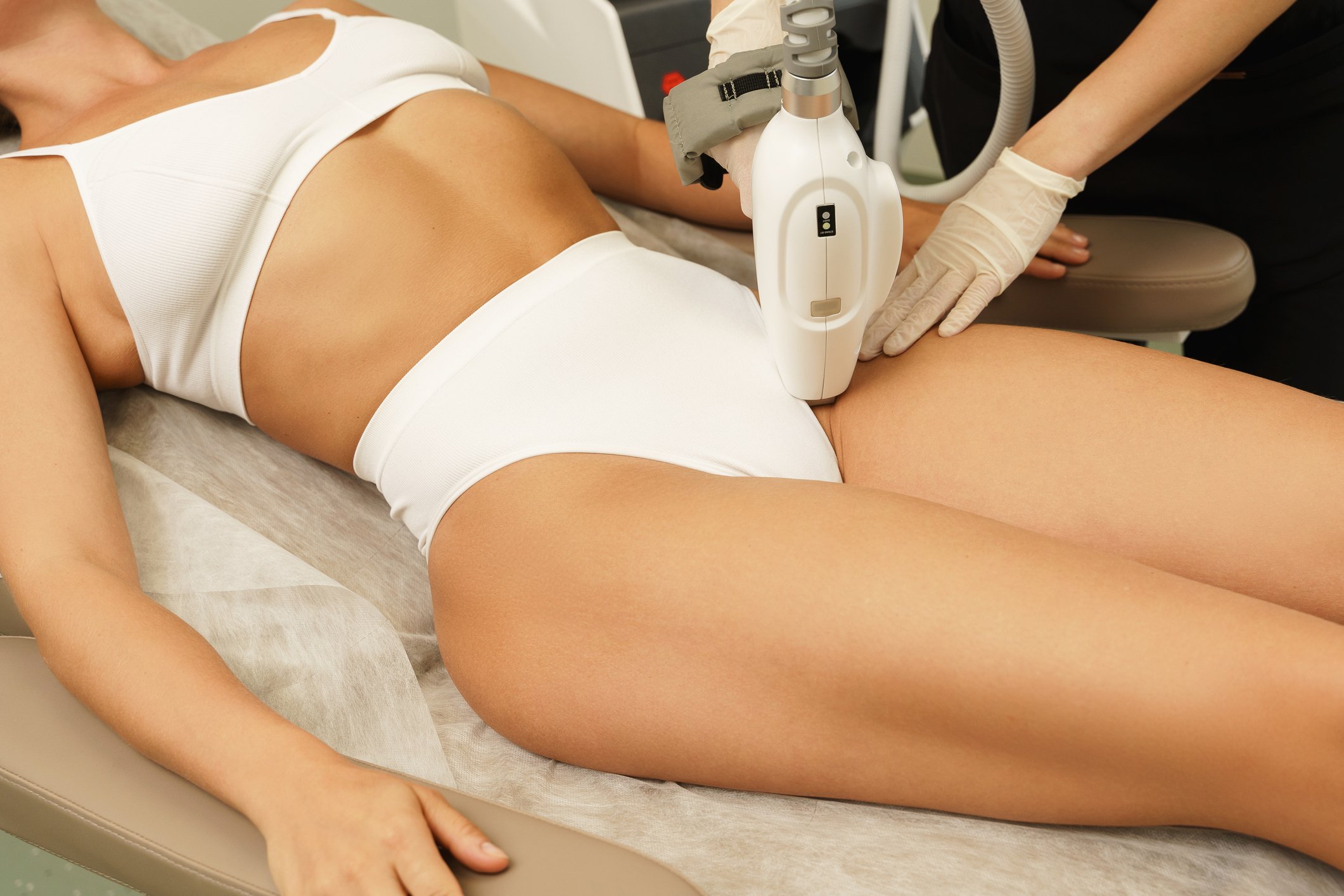
Laser hair removal is the most common and very effective. It involves sending a series of light pulses to burn the hair roots. It can be used on various parts of the body (back, legs, chest, armpits, etc.). The advantage of laser hair removal is that it is suitable for all types of hair and skin. It allows for the removal of 80 to 90% of your body hair. For good results, it is best to entrust the work to professionals.
The intense pulsed light technique is a semi-permanent method that is very trendy. It involves sending intense light into the hair bulb. This is transformed into heat and acts directly on the cells that promote hair regrowth. This type of hair removal can remove up to 90% of hair, but it is not very effective on mixed or dark skin.
Electrical hair removal by electrolysis is completely permanent and must be performed by a doctor. It involves using an electric current to destroy hair roots. The charge is delivered via a needle inserted into each follicle. It is suitable for all skin types but is more effective on gray and light hair. However, it is more painful than laser hair removal and takes longer.

How to assess the effectiveness of permanent hair removal in the short and long term?
The effectiveness of permanent hair removal can be measured in various ways. To start, you should inquire about the amount of hair that can be destroyed. This can vary depending on the chosen method. You should know that they do not fall out automatically even after completing all sessions. In the short term, it is therefore important to avoid measuring the effectiveness of hair removal by the speed at which the hair disappears. Generally, they fall out naturally 2 to 3 weeks after the last session. In some cases, they may last up to 4 weeks.
It is also important to find out how long it takes for regrowth to occur. For example, with laser hair removal and electrolysis, the hair is completely destroyed. In 1% of cases, they may regrow after several years but will be very fine and have low intensity. On the other hand, with intense pulsed light hair removal, there may be regrowth after 2 to 3 years. This is why it is referred to as semi-permanent. Also, check whether the method does not irritate the skin and if it allows for the removal of the finest hairs.
Some tips to optimize the results of your hair removal treatment
Permanently removing hair allows for the removal of a significant portion of the hair on your body. However, certain factors can influence the effectiveness of the treatment. Therefore, you should take some precautions to achieve a perfect and long-lasting result. To start, you should consider your pigmentation and hair color before choosing a method. For example, electric and laser hair removal are suitable for all skin types, while intense pulsed light works best on light hair.
This cosmetic procedure is recommended for people of a certain age, as the later you start, the better the results. During adolescence, the hair is fragile and considered to be downy. Laser, electric current, or intense pulsed light are only effective on mature hair follicles. This condition is often met from the age of 20, but the ideal is to wait until 25 before starting this treatment.
Permanently removing hair requires multiple sessions. The number varies between 5 and 10 depending on the chosen method, your hair density, and your skin type. To permanently remove all hair, you must continue with the sessions until the end. Therefore, avoid interrupting the treatment because it is painful or as soon as the hair starts to fall out.
If you have hormonal or medical issues, discuss them with the professional. They need to take this into account when choosing the hair removal method and the power of the device. For example, for the laser method, the equipment used on dark and matte skin is different from that used for light skin. Finally, a treatment protocol must be established and followed rigorously to destroy the maximum amount of hair.

Alternatives to permanent hair removal
If permanent hair removal does not appeal to you, traditional methods may still be sufficient. They are almost painless and do not always require the intervention of a professional. Temporary hair removal can be done:
- with a manual or electric razor,
- with wax,
- with hair removal cream,
- with an electric epilator,
- with thread.
A manual or electric razor is economical and can be used on any part of the body. However, regrowth is very quick, as shaving does not pull out the hair roots. For effective hair removal, it is advisable to first exfoliate to remove dead skin and soften the hair. Finally, apply a moisturizing cream to prevent the appearance of bumps and ingrown hairs.
Waxing is popular and suitable for the bikini line, legs, and armpits. It pulls out the hair, meaning there will be no regrowth for several weeks. The wax can be applied hot or cold. The method using hair removal cream does not cause bumps or ingrown hairs. It is quick and very easy to apply. It dissolves the hair without destroying the root. Therefore, hair follicles regrow very quickly.
The electric epilator has many small tweezers that pull out the hair while shaving. This technique is painful, but the results are long-lasting. It may lead to the appearance of bumps and ingrown hairs. Therefore, you should exfoliate beforehand and use a moisturizing cream after shaving. You also have threading, which is much more suitable for the face. It allows for precise shaping of eyebrows and the removal of fine hair from the mustache.