The Personal Lookbook, a New Form of Stylistic Storytelling
This publication is also available in:  Français
  English (UK)
  Deutsch
  Italiano
  Español
At a time when images are flashing by at a dizzying speed on our screens, where daily outfits fade into the continuous flow of stories, one question remains: what remains of our style once the filter is lifted? In the face of this programmed obsolescence of aesthetics, the personal lookbook emerges as a slow and controlled response. Neither a simple archive nor a mere vanity project, it becomes an intimate visual manifesto — the stylized memory of an era and an identity.
Giving meaning back to the image: from scroll to archive
The scroll has become a reflex. We consume images as we would consume a snack, quickly, without stopping. However, in this saturated landscape, a need for perspective emerges. The personal lookbook offers this breath: it transforms a series of outfits into a coherent narrative. We no longer publish to please in the moment, but to build a trace. It’s a way to reclaim our image, outside of algorithms.
The lookbook as an aesthetic mirror
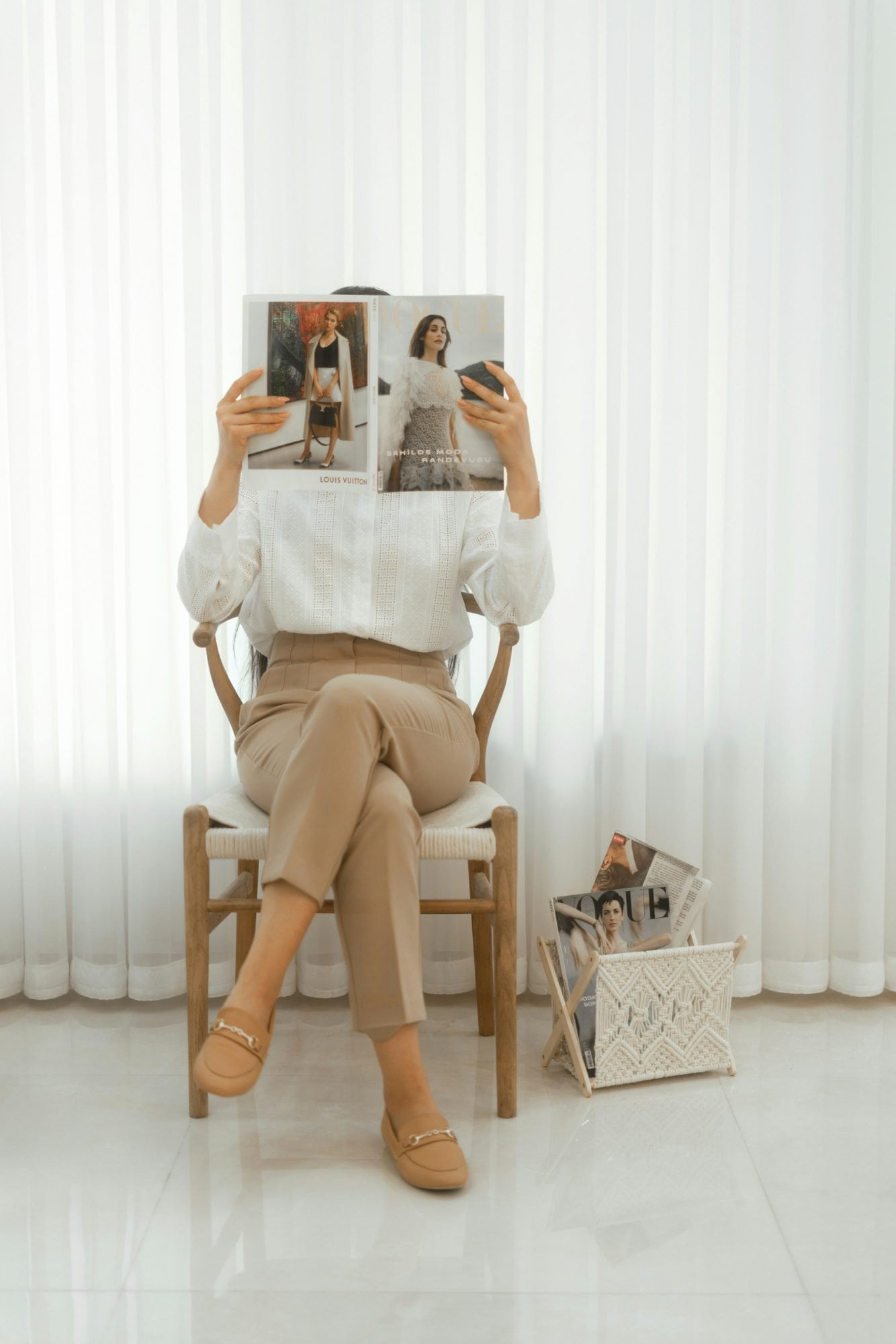
Creating a lookbook is also about seeing oneself differently. It’s no longer just about composing a flattering silhouette, but observing what that silhouette says about us. Florence Pugh, with her flowing nude dresses, or Zendaya, oscillating between architectural tailoring and nonchalant sensuality, are examples of artists who turn each appearance into a stylistic statement. The lookbook thus becomes a mirror — not that of narcissism, but that of cultivated and affirmed taste.
Designing your lookbook: structuring, narrating, revealing
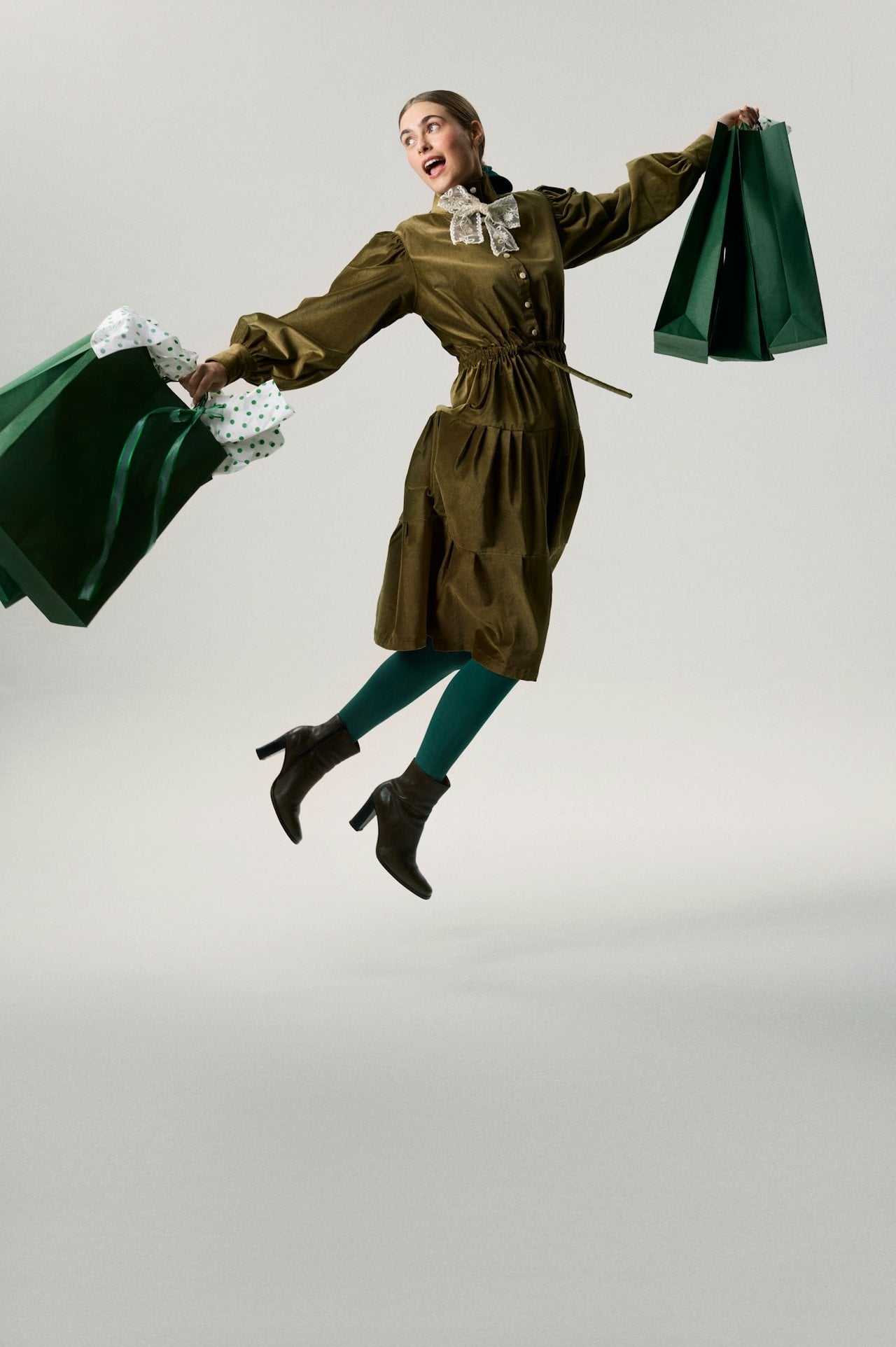
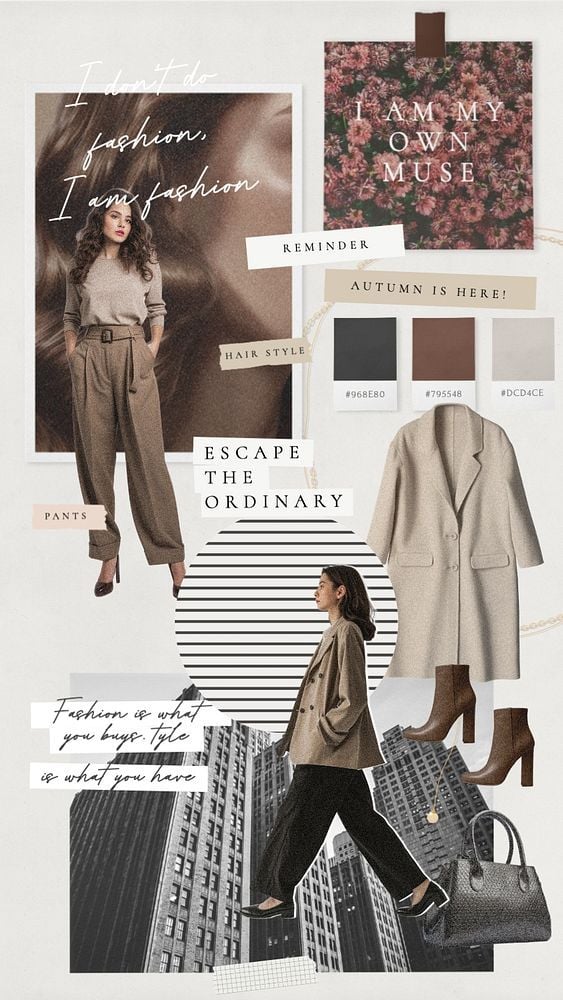
Like a creator would think about a collection, one structures their lookbook around a narrative. The year can be divided by seasons or moods: a summer marked by light bohemian styles, a fall of bold layering. The logic is not linear; it is sensory. Adding captions, anecdotes, and emotions of the moment gives depth to the image. Far from the standardized feed, it is the uniqueness that matters here.
Choice of medium: editorial aesthetics and sustainability
A personal lookbook deserves nothing less than the quality of a beautiful book. Square format inspired by specialty magazines, high-quality papers, matte or velvety textures… The details matter. Some publishing workshops offer finishes worthy of the finest publications. Creating a true photo book then becomes an extension of one’s style, down to the materiality of the object. Fabric cover, sewn binding, fine printing: the form fully aligns with the content here.
Trends to capture: 2025 in images
This year, several aesthetics are leaving a mark. The reinvented bohemian style — long weathered dresses, subtle embroidery — finds its icons at Etro and Isabel Marant. Discreet luxury, celebrated by Polène or DeMellier, values artisanal work over ostentation. Finally, graphic layering, seen at Miu Miu or Acne Studios, tells a story of youth composing its style in layers. These trends are not to be consumed: they are to be documented, digested, and made one’s own.
From style to personal heritage
A well-thought-out lookbook captures not just a silhouette, but an era, a perspective, a worldview. It becomes a visual heritage, passed down to oneself over time or to others as a legacy. It’s a practice that invites us to consume less but better, to look differently, to buy with consciousness. Engaged creators like Gabriela Hearst or Marine Serre have understood this well: clothing can be both a manifesto and a tool for transformation. The personal lookbook, in this context, stands as a space for thought and creation.