Modest Fashion Week: Fashion in a Different Way
This publication is also available in:
 Français
  English (UK)
  Deutsch
  Italiano
  Español
You know the Fashion Week of Milan, Paris, London, perhaps even that of Berlin or Copenhagen for the more knowledgeable. But do you know about Modest Fashion Week?
No? Yet, while the fashion capital, aka Paris, welcomes a plethora of stars and bling-bling during its regular Fashion Weeks, the City of Light also opens its doors to a slightly different Fashion Week that is starting to make waves in the industry and among the public: the Modest Fashion Week, which took place on April 16, 17, and 18.
As its name indicates, Modest Fashion Week celebrates fashion with an additional touch: diversity and designers from countries that are often less highlighted on the front stage like Qatar, Nigeria, or Indonesia. An event to know about to open oneself to the world and which once again confirms that fashion has no borders.
A Brief Introduction to Modest Fashion Week
Launched at the end of the 2010s, the Modest Fashion Week was born from the desire to give international visibility to a segment of fashion that has long remained on the margins, as well as to cultures that have not been sufficiently highlighted. It is largely thanks to initiatives like that of the organization Think Fashion that the event has been able to come to life and structure itself on a global scale.
From its very first editions, organized in cities like Istanbul and Dubai, Modest Fashion Week has managed to attract attention by offering an alternative to traditional calendars. The goal: to create a space where modest fashion designers can express themselves freely, while responding to a growing demand from the public.
Beyond religion and cultural diversity, the “modest” style represented here is far from being a niche. Modest fashion today is part of a global dynamic. Driven by a new generation of connected consumers, it reflects a strong expectation: that of a more inclusive fashion, respectful of cultural identities and individual choices.
A Growing Impact on the Fashion Industry
The emergence of Middle Eastern countries, along with the rising level of education and independence among women, has clearly contributed to the growing interest in such events. Modest fashion is now establishing itself as a true strategic segment for the industry. According to several studies, this market is worth hundreds of billions of dollars globally, and importantly, it continues to rise, driven by a young, connected generation in search of representation.
From a cultural perspective, the shift is quite clear. The era when the West dictated the codes? A bit outdated. Today, young women want to embrace their culture without compromising on style. No more choosing between tradition and modernity; they mix, they appropriate, they reinvent.
And naturally, this is shaking things up.
Big brands are watching this closely. Some adapt, while others are frankly inspired. Roomier silhouettes, mastered layering, new ways of thinking about clothing… what was once seen as “separate” is slowly becoming mainstream.
In short, it’s no longer just a trend we observe from afar. It’s a real change in perspective.
Designers to Watch Closely
It’s impossible to list them all, but I offer you a small selection of designers who have managed to stand out by showcasing their collections at this Parisian edition of Modest Fashion Week.
Soutoura
One of my favorite collections, with a hint of Balenciaga from the Demna era. The new collection mixes street art aesthetics with interesting cuts, jewelry, leather materials, and denim pieces. The French brand has successfully combined modernity and simplicity.
Flaunt Archive
The brand, originally from Nigeria, offers modest dresses with beautiful cuts, featuring details like crafted sleeves that echo the richness of Nigerian culture. The colors are vibrant, and the textures meet the expectations of women seeking comfort without compromising on aesthetics.
Arsumerzaeva
Originally from Russia, Arsumerzaeva offers modern, feminine outfits full of personality. The cuts have character, designed for women who fully embrace who they are and their values.
Garzia
Created in Turkey, the brand aims to honor the cultural heritage of the country while emphasizing femininity. The result? Ultra chic and feminine silhouettes, with simple pieces reimagined in a truly elegant way. Garzia plays on the minimalist basics of the wardrobe, with soft colors and modern cuts that immediately catch the eye.
Nada Puspita
The softness of South Asia, specifically Indonesia, on the runways. Indonesia is a Muslim country, so its inhabitants must follow certain rules regarding attire, including wearing a scarf. The colors are soft, like pale pink, beige, or caramel. The slightly satin-like materials add even more lightness to the pieces.
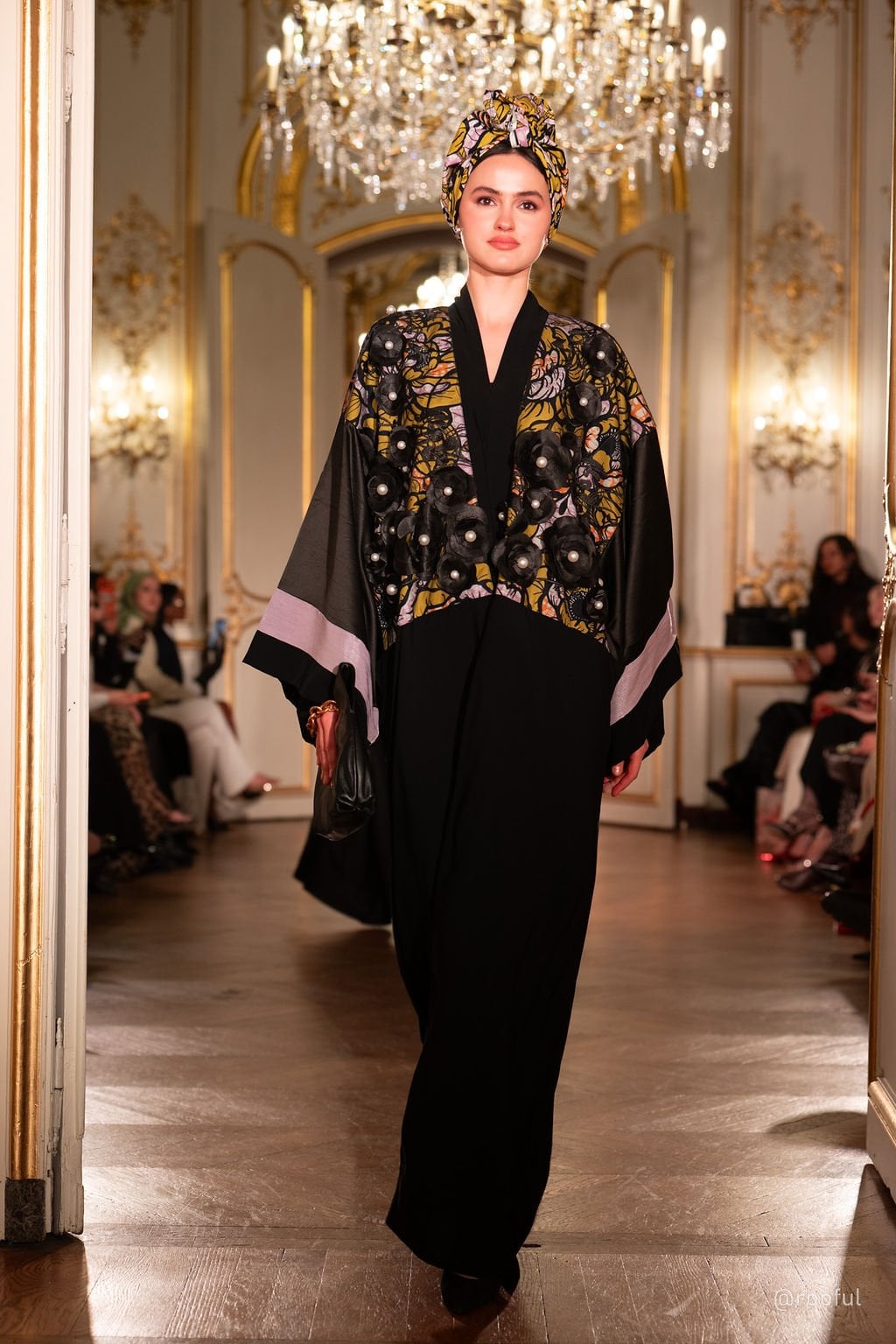
Cover image: ©Rooful Ali/model of Afrik Abaya