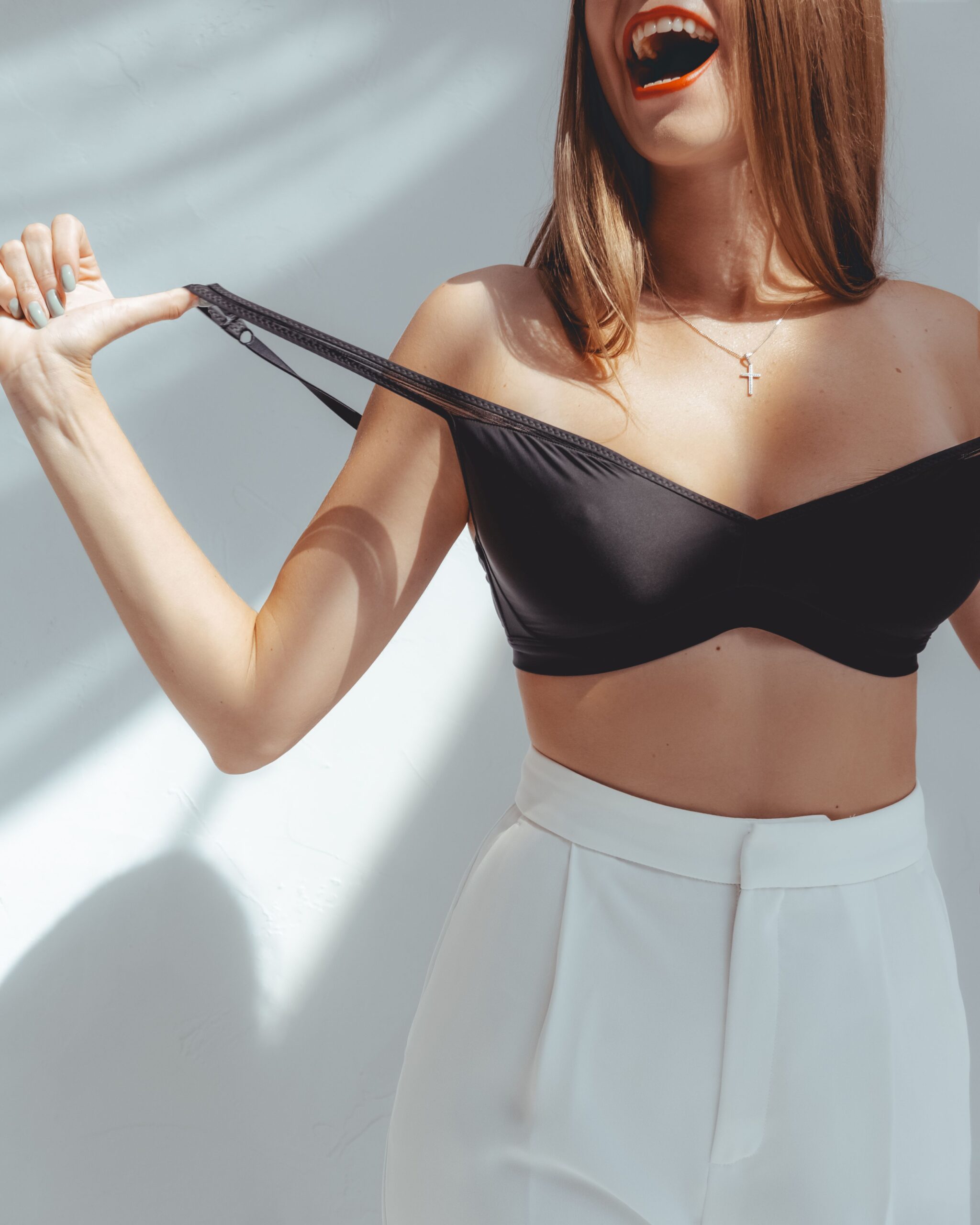
No-bra: Can we really go without a bra?
This publication is also available in:
 Français
  English (UK)
  Deutsch
  Italiano
  Español
Long considered a staple of the women’s wardrobe, the bra no longer holds the same status. Since the lockdowns and the rise of the #NoBra movement, going out without underwire has become a habit for many women. More than just a search for comfort, this evolution accompanies a more personal way of envisioning one’s silhouette, without necessarily making no-bra a rule. Because the experience varies depending on body shape, breast volume, and individual preferences.
- 1. The No-Bra Movement: Where the Trend Comes From and Why It’s Here to Stay
- 2. No-Bra and Sagging Breasts: What We Really Know
- 3. Fashion Alternatives for Feeling Comfortable Without Underwire
- 4. When Body Shape Makes No-Bra Less Comfortable
- 5. Between No-Bra and Invisible Lingerie: The New Wardrobe
- 6. With or Without a Bra: The Freedom to Choose
The No-Bra Movement: Where the Trend Comes From and Why It’s Here to Stay
The no-bra movement did not originate with social media. The bra, and before it, the corset, have regularly crystallized debates around the female body and its constraints. However, the lockdowns acted as an accelerant: at home, flexible clothing and less structured silhouettes led some women to stop wearing bras daily. The hashtag #NoBra then gave this practice new visibility.
Fashion has accompanied this shift in perspective. Second-skin dresses, minimalist tank tops, fine knits, and sheer shirts now make up less corseted silhouettes. At Saint Laurent in particular, veils and necklines frequently question the boundary between clothing, lingerie, and skin.
However, this freedom does not provide the same comfort for everyone. A larger bust or one marked by breast ptosis can make certain activities less pleasant without support. When this evolution becomes a lasting concern, some women consider an intervention to lift their breasts. Such a decision remains medical and personal: it is neither a prerequisite for going braless nor an aesthetic necessity.
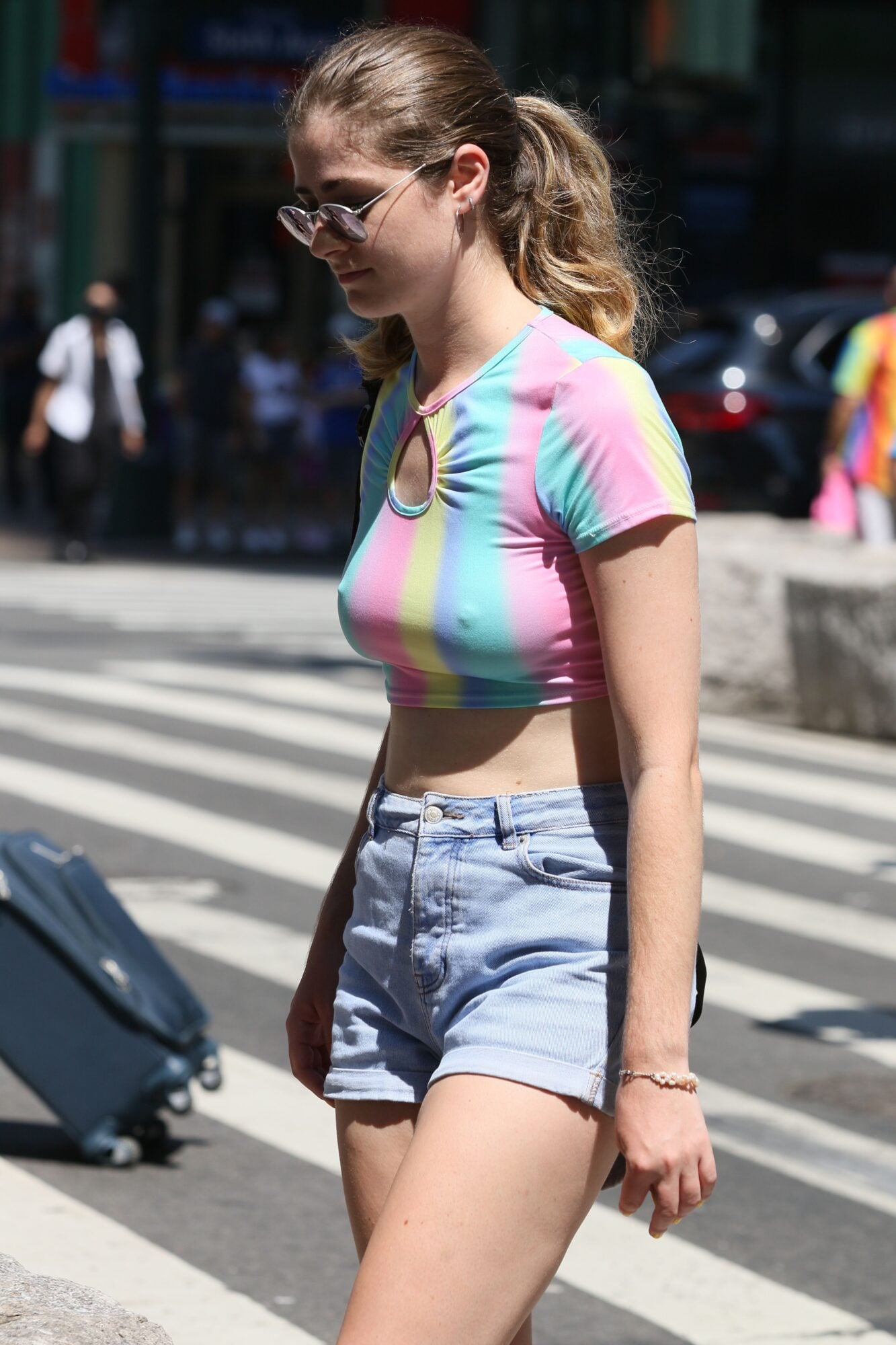
No-Bra and Sagging Breasts: What We Really Know
A persistent idea suggests that the absence of a bra promotes “sagging breasts.” Conversely, wearing one daily is sometimes presented as a way to maintain breast firmness. However, available scientific knowledge does not allow us to affirm that not wearing a bra alone causes breast ptosis, nor that wearing one prevents it.
The shape of the breasts evolves under the influence of many factors: age, skin elasticity, breast volume, weight fluctuations, or changes related to pregnancies. The bra primarily provides mechanical support and can improve comfort, especially during sports, without preventing the natural transformations of the breast. Information from the French Society of Plastic Reconstructive and Aesthetic Surgery helps to better understand the various breast interventions and their indications.
Fashion Alternatives for Feeling Comfortable Without Underwire
Between structured bras and complete no-bra, there now exists a whole range of intermediate options. Wireless bras support the bust without replicating the rigidity of traditional models. Thin and seamless, they disappear under a t-shirt; more elaborate designs can be worn under a shirt or blazer.
Bodysuits create a sleek line without adding bulk. Tops with built-in support meet the same quest for simplicity. The fabric also plays a role: double jersey, dense ribbed knit, or thick cotton structure the silhouette more than very fine materials. Layering—such as a jacket over a fitted tank top or a shirt over a bodysuit—finally allows for modulation of support without sacrificing style.
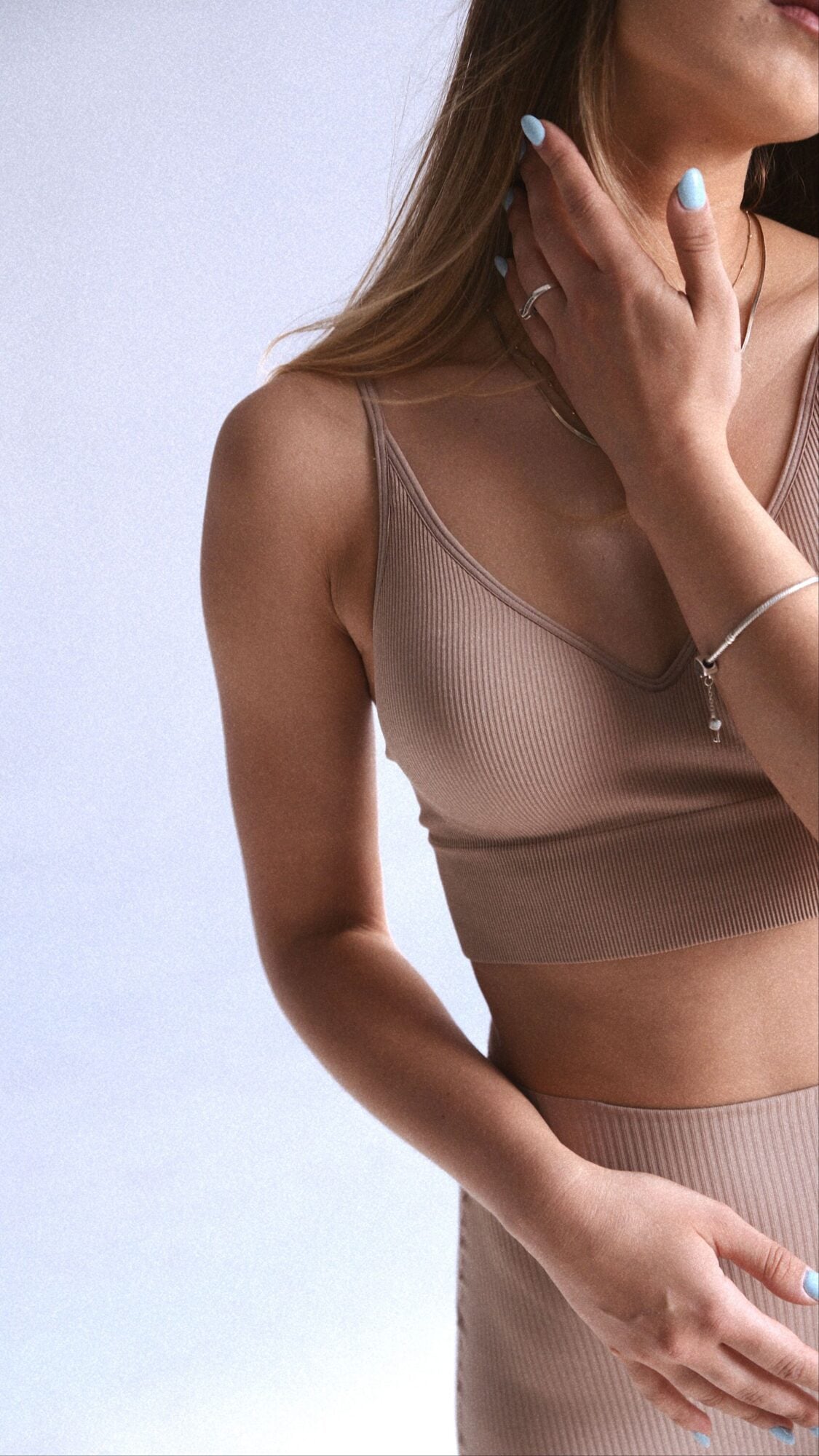
When Body Shape Makes No-Bra Less Comfortable
The image of a silhouette free from any lingerie does not necessarily correspond to the sensations of everyone. A significant or highly mobile bust can cause discomfort in daily life, even if some women with generous breasts perfectly appreciate going braless. There is no body shape that inherently permits or prohibits this choice.
When breast shape or volume becomes a lasting source of discomfort, various surgeries may be considered after consultation. Breast lifting, or mastopexy, reshapes breasts that show ptosis. Breast reduction decreases volume while reshaping the breast when it is deemed too large. Breast augmentation has a different objective as it aims to add volume, notably through implants or fat transfer as indicated.
These interventions remain surgical acts involving scars, postoperative periods, and risks. They do not guarantee that a woman will subsequently wish to live without a bra. The decision must be based on complete information, a discussion with a qualified plastic surgeon, and personal motivations, rather than on a trend.
Between No-Bra and Invisible Lingerie: The New Wardrobe
The contemporary wardrobe offers more nuances than a simple opposition between underwire and completely free breasts. A bralette can almost disappear under a dress, a bodysuit can replace several layers, while delicate lingerie can intentionally show beneath a blazer. For those who prefer discreet support, our guide on how to make lingerie invisible presents solutions suited to the most delicate garments.
Lingerie no longer necessarily aims to shape all silhouettes according to the same ideal. It can support, structure, disappear, or fully participate in the look. Its absence is also a clothing possibility.
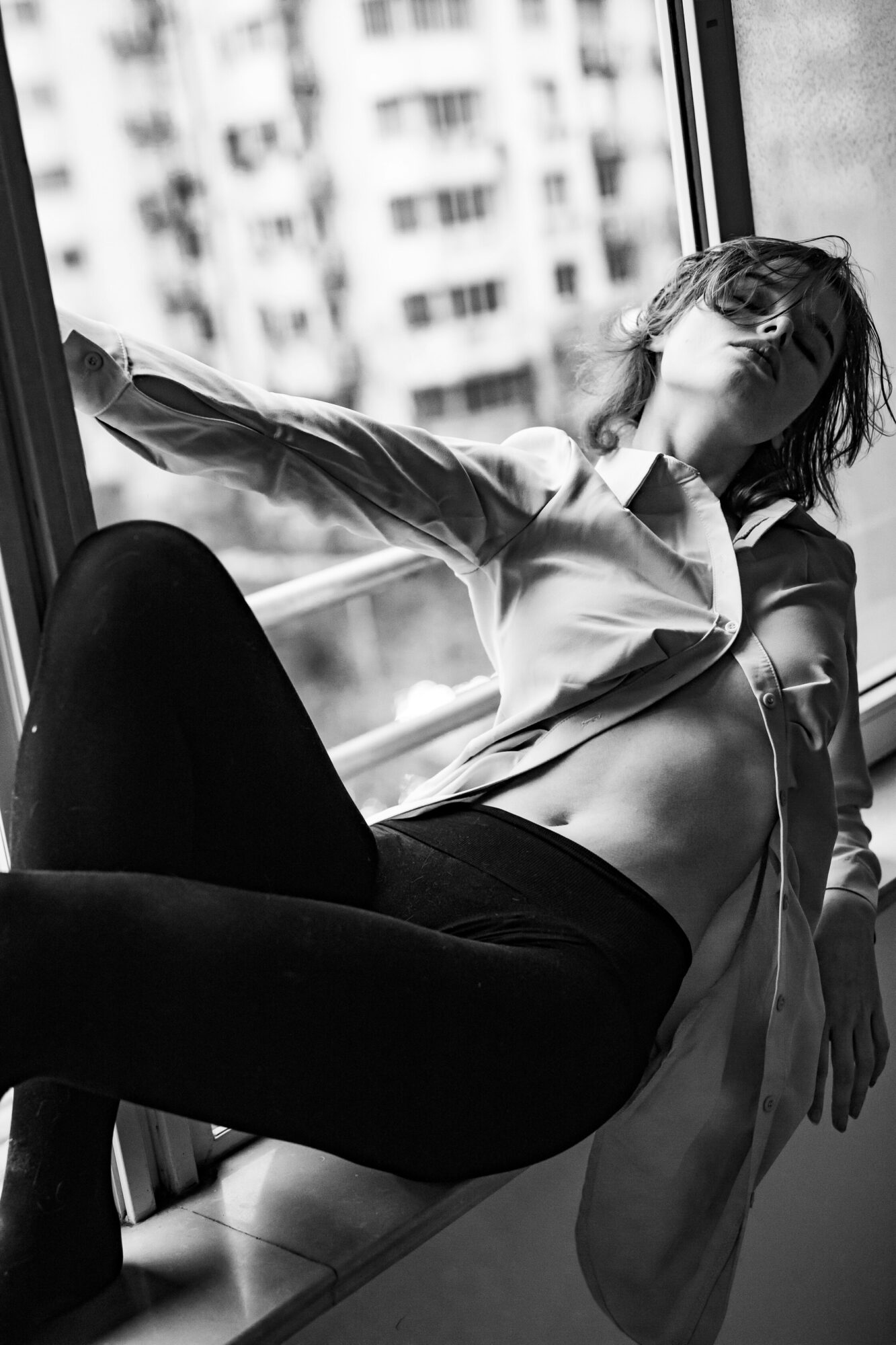
With or Without a Bra: The Freedom to Choose
The success of the no-bra movement signals less the disappearance of the bra than the end of its systematic nature. Some women appreciate structured support, others the softness of a bralette, and still others feel better without anything. These preferences may also change depending on the outfit or activity.
Ultimately, comfort, body shape, and personal tastes remain the best guides. The luxury of the no-bra may lie precisely in this freedom: not deciding to never wear a bra again, but being able to choose whether or not to do without one.